Fatigues are Better than Jeans
The best pair of day-to-day-pants has cool pockets, and it comes in olive green.
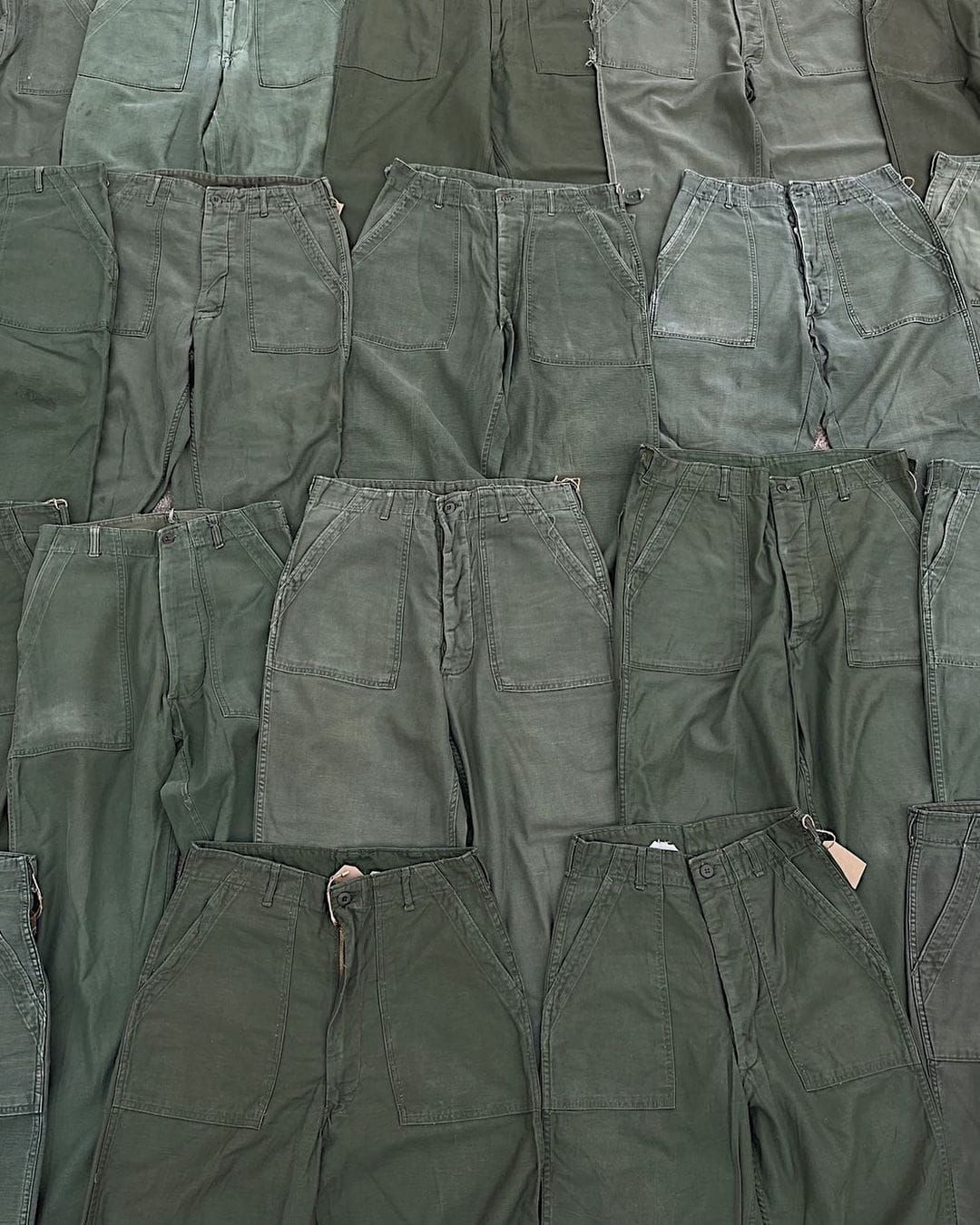
As fall approaches, and my linens revert to the back of my closet, medium-weight cotton pants will once again be my default. And while jeans, chinos, and cords will always have a place in my closet, pole position belongs to the very best casual pants of all, fatigues.
Now, does the premise here make a lot of sense? No. Is there any reason to compare the two styles of pants when a decent wardrobe can just contain both? Yes, and that is that it's fun. Also, it's true, Fatigues are better than jeans.
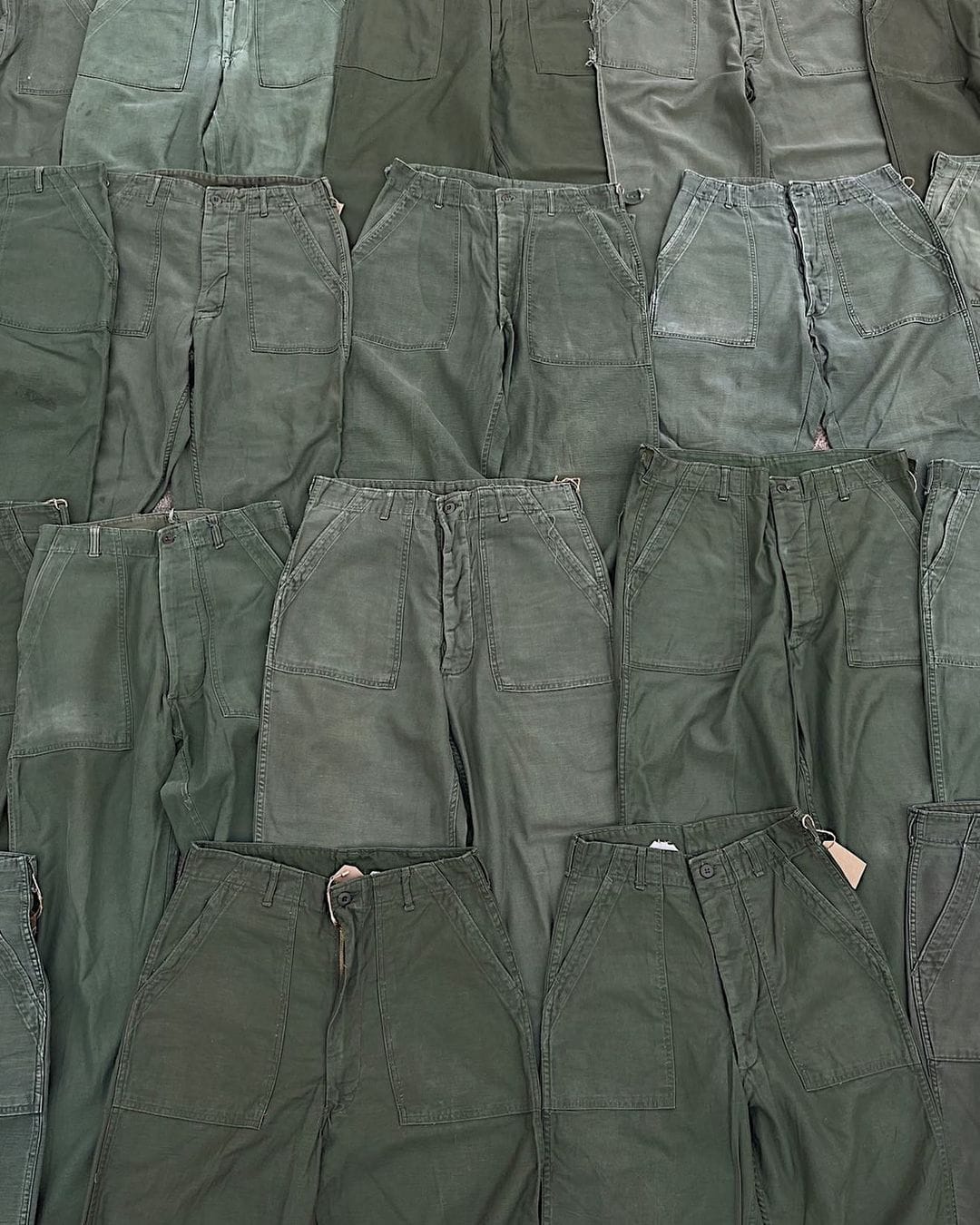
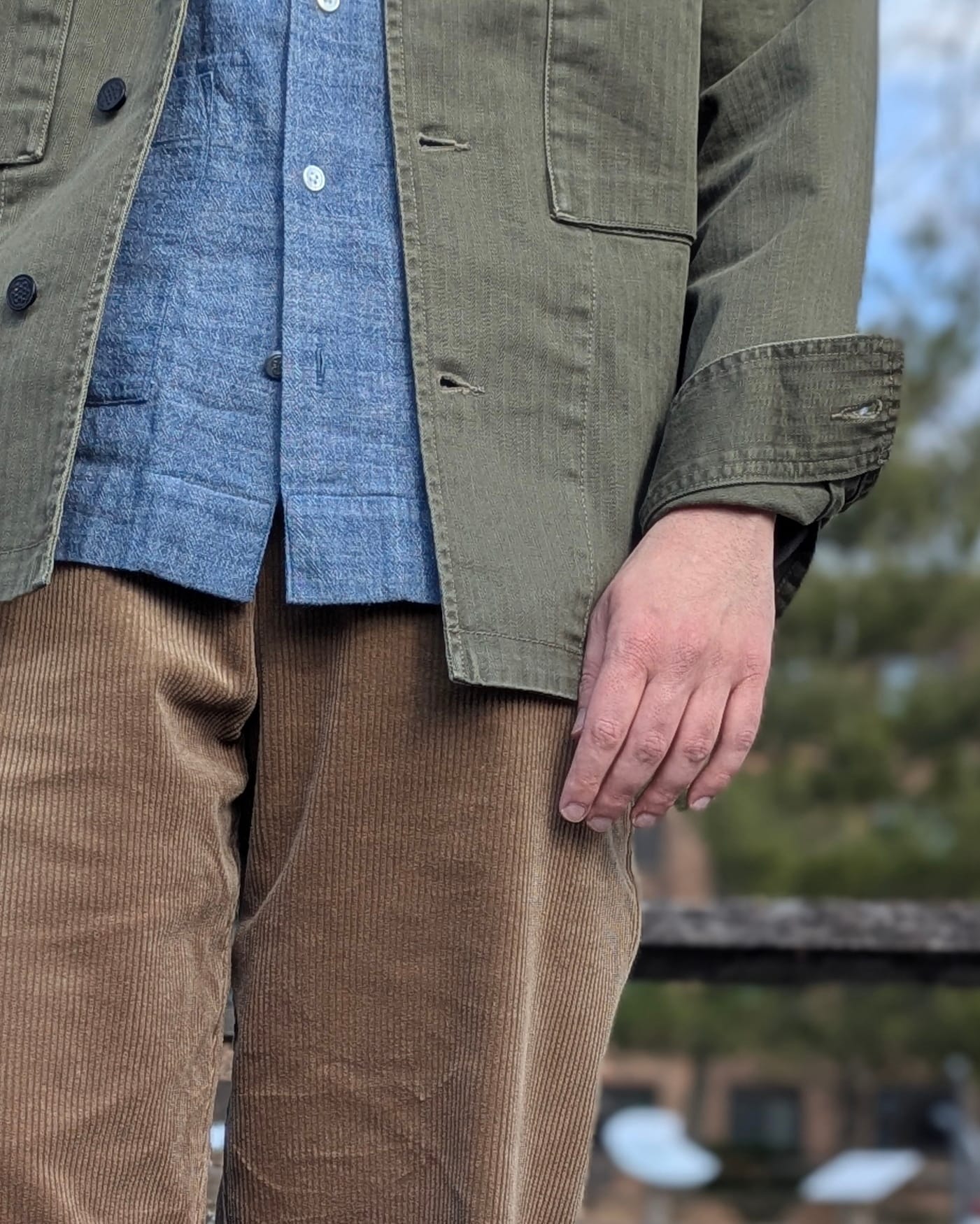
Specifically, fatigue pants with those squared-off pockets. The kind originally made in reverse sateen, Olive Green #107 (the color and fabric from which they get the name ("OG-107"), but also often rendered in an olive herringbone twill instead ("HBT").
This article will deal with those classic fatigues, but also p-43 fatigues, monkey pants, and fatigue jackets, all defined below.
- Fatigue Lingo
- Making the case
- Fatigue Inspo
- Fatigue Jackets
- Where to Get Fatigues
- Secondhand Fatigues (perk for paid subscribers)
Fatigue Lingo
- A lot of this lingo is non-standard. Some of these terms are just defined to the best of my ability. Some have a clearer history. Some just make no sense. Don't feel stupid. You're not stupid. Everybody else is stupid.
- "Fatigues," broadly speaking, just refers to a casual military uniform used for combat or training (they make you run, you get tired, hence, fatigues). It can be any color, any fabric, whatever that military happens to use. This definition is useful in a military context, but less so if you want to talk about style.
- More narrowly, it's used to refer to a few common military styles the fabrics are mostly olive green reverse sateen or olive green herringbone twill, with certain pocket layouts.
- Even more narrowly, it's used to refer to fatigue pants with squared off patch pockets. This definition is useful because they're the most common style, and every other style has a more specific name.
- More narrowly, it's used to refer to a few common military styles the fabrics are mostly olive green reverse sateen or olive green herringbone twill, with certain pocket layouts.
- "OG-107" originally referred to a particular shade of Olive Green (hence "OG") on a list of fabrics being tested for military use. And it was a reverse sateen.
- "Reverse" in this context means inside-out. Satin weaves are normally used with the other side out. Fatigues use the "reverse" side on the outside.
- Nowadays, when people talk about "OG-107s," they usually mean standard fatigues in cotton sateen. But it wasn't originally about the style of pant, just about the color and fabric.
- "HBT" stands for "herringbone twill." A herringbone is the most common type of "broken twill," but I think there are other types? But in milsurp contexts, they usually call it "HBT."
- Certain styles will be referred to as p-43s or p-44s. As you might guess from the numbers, those are associated with certain years of World War II.
- I think there is some inconsistency in how these terms are used. I could be totally wrong here, and it might just be that p-43 and p-44 are totally interchangable, but my general understanding is:
- "P-43" refers to fatigues with cargo pockets at the side instead of the rectangular pockets. When you think of cargo pockets, you think of cargo pockets in addition to regular pockets, lower down the leg, don't you? Nope. These are just the cargo pockets.
- "P-44" refers to a variant of a p-43 pant that additionally has one large cargo pocket on the back, often referred to as a "monkey pocket." Sometimes, they're called "monkey pants."
- "P-41" refers to fatigues with these front patches.
- These styles are usually made in HBT, since reverse sateen was developed after World War II.
- Fatigue shirts / overshirts / jackets / whatever are soemtimes called p-44 shirts or p-44 jackets.
- A lot of these would come with some sort of military crest, or with the soldier's name on them somewhere. Note: if the soldier's name is "R. Lauren," that's not real milsurp.
- For the platonic ideal in my head: two bellows pockets, similar to p-43 pants. The front seam of the cargo pocket is sometimes sewn down, whereas the bottom and rear side bellow out to create room. Sometimes the pockets have a double inverted pleat.
- "Fatigue Jacket" might sometimes refer to something like an M65 field jacket or an olive jungle jacket (kind of like a cross between an M65 and a safari jacket: four pockets, but these are angled with no visible buttons, and a waist cinch). But again, those have better, more specific names.
- And I'm going to try not to spend too much time on them, the M65 could get its own article and is really beyond the scope of this one.
- And there are other styles of fatigue shirt / fatigue jacket / field jacket that I'm less clear on, specifically. Some have one pocket. IDK, there are a lot of styles.
- Some of these would come with a "gas flap." Essentially, there's extra fabric on the inside that you can fold over to block gas from reaching through the jacket. It's still cotton, though, so it's still kinda breathable... I wonder how effective these were.
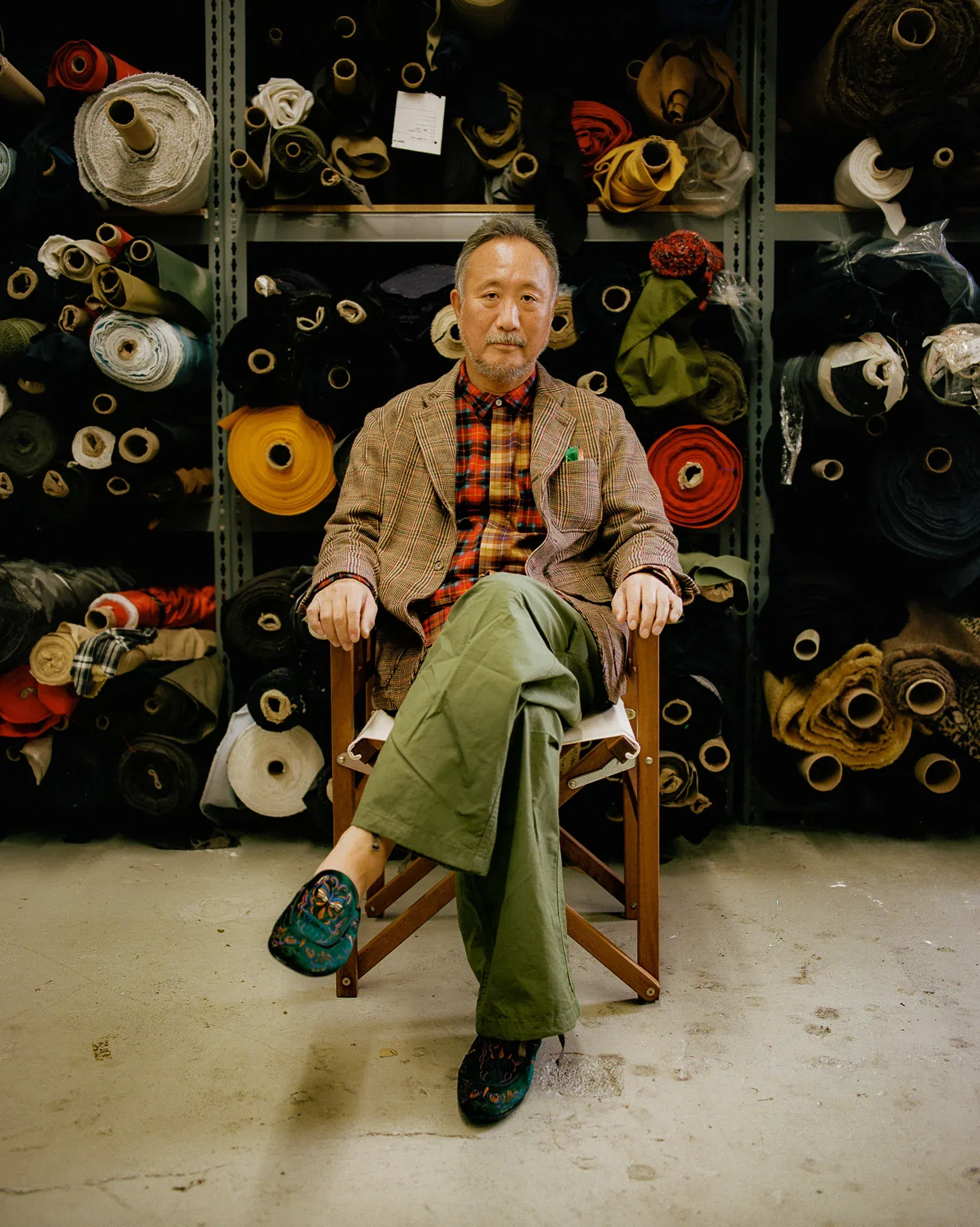
Why Fatigues are Better Casual Everyday Pants than Jeans
Compared to jeans, classic fatigue pants have several benefits:
- Better pockets
- Larger. Big pockets good.
- Easier to rest your hands in because they're not stupid five pocket pants. I hate five pocket pants.
- Still as secure as five pockets or as slant pockets regardless of the position.
- High-rise five-pocket pants are annoying because my phone sits right where I want my pants to bend.
- Better fabric
- The Iron Snail discusses the durability of reverse sateen here.
- Herringbone twill has several advantages over left-hand and right-hand twill. It's generally stronger and it shouldn't twist. It's also usually softer, in my experience. Much more pleasant than denim.
- There's no weird obsession with fabric that feels just as bad as it did in the 50s, fatigues are actually allowed to have fabrics that feel nice and are comfortable.
- High rises, straight legs.
- Denim tends to look most natural at a lower rise. High rise denim is fine, but unusual, and harder to find.
- Fatigues are almost always high rise, which I generally prefer,and almost never slim, because why would they be, they're made to serve a function.
- This high rise might make fatigues look more natural when dressed up... But at the same time, you see jeans with tailoring all the time, so fatigues are a more fun, more interesting choice. They show off your intentionality, and they work.
- Equal recognizability as casual, everyday pants.
- Equal if not greater versatility (they may pair better with navy jackets).
- Both age beautifully, nicely faded fatigues are more rare and therefore more special.
- They both often use metal buttons, but Fatigues use these military buttons with thirteen stars on them, and I just like that detail. The rear pocket flaps also button shit with these same buttons. Some fatigues use thick plastic buttons in a matching shade of olive; military clothing needs to be mass-manufactured, and many modern options are reproductions of this kind. Some brands just use common metal tack buttons. Buuuut the thirteen-star metal buttons are cooler.
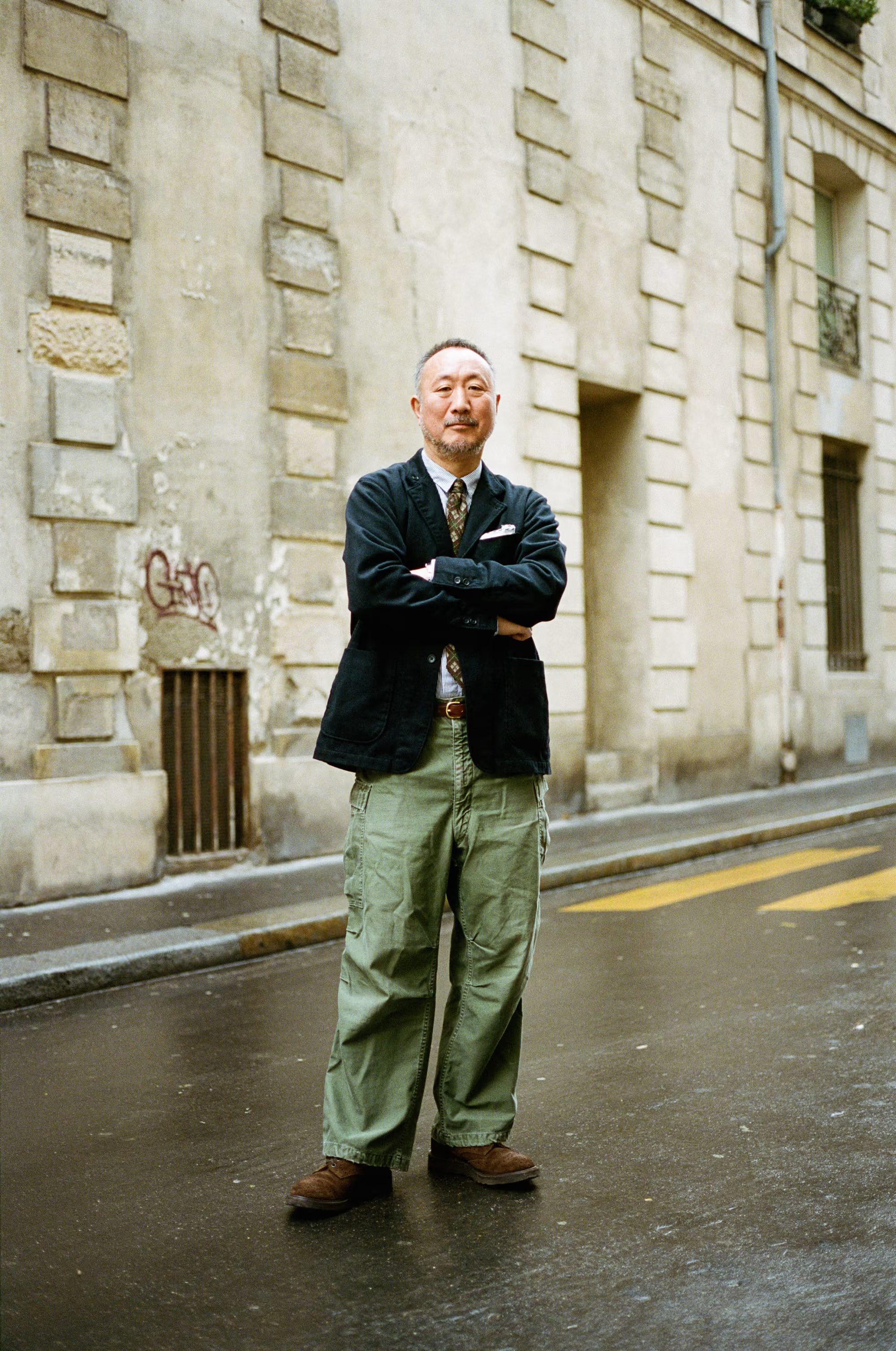
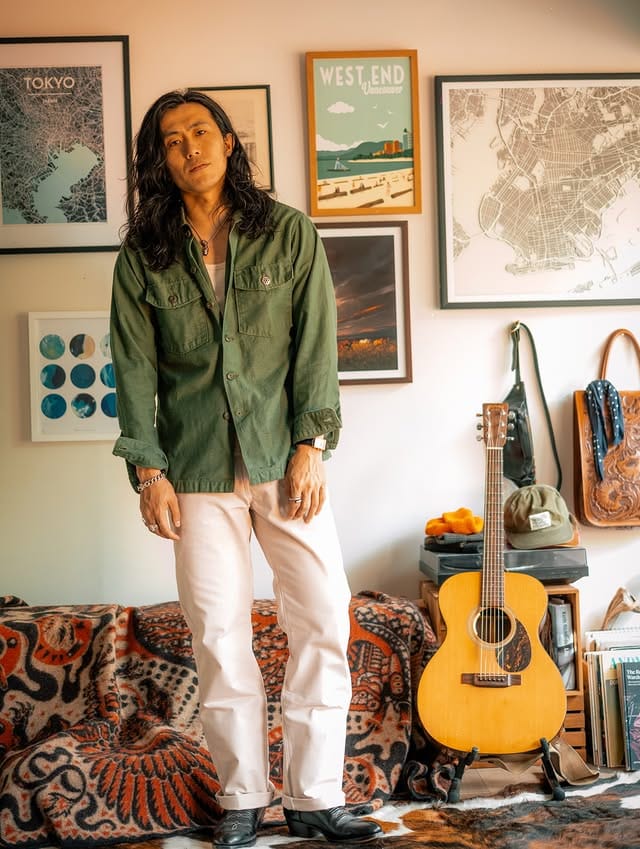
- Daiki Suzuki loves them.
Fatigue Inspo
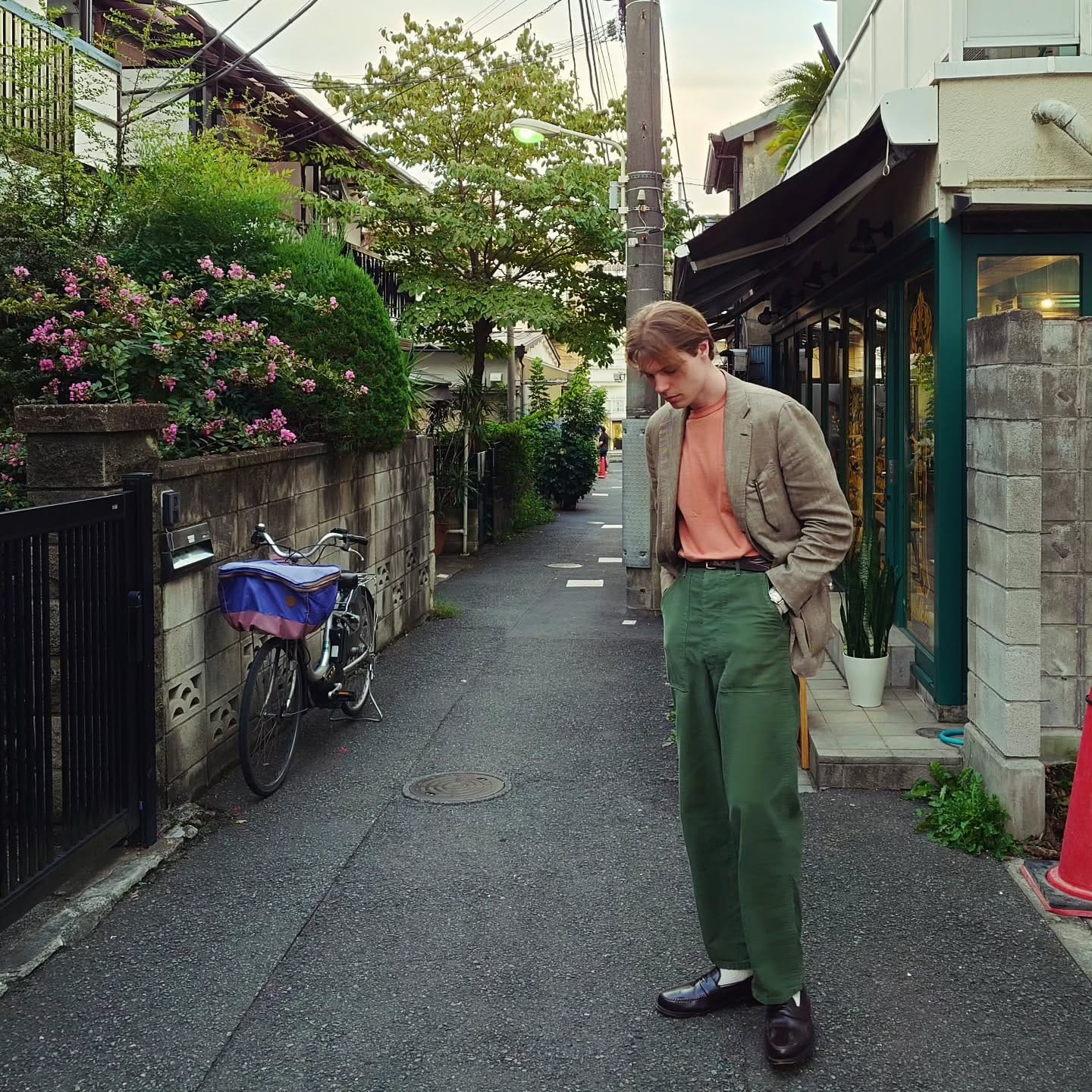
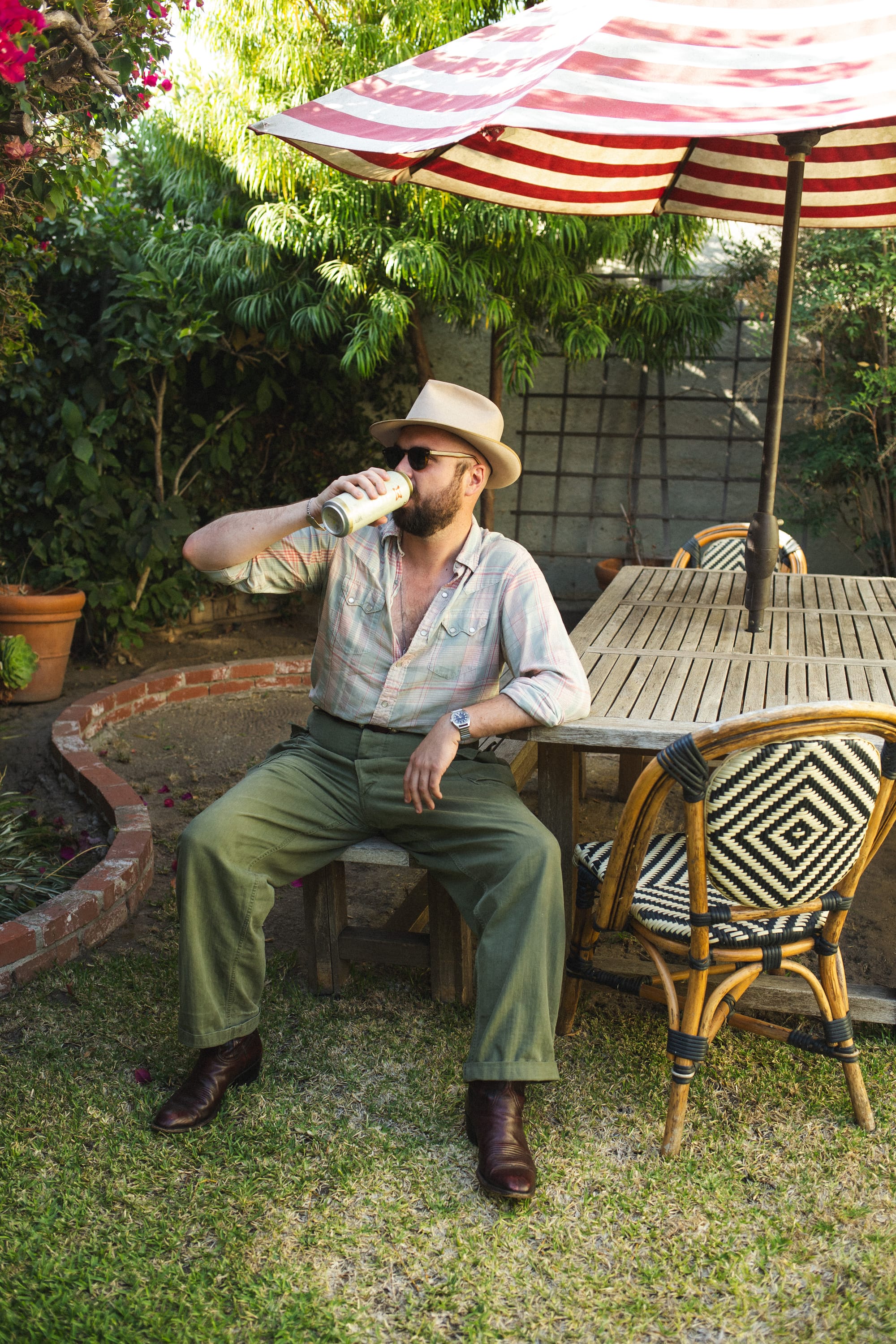
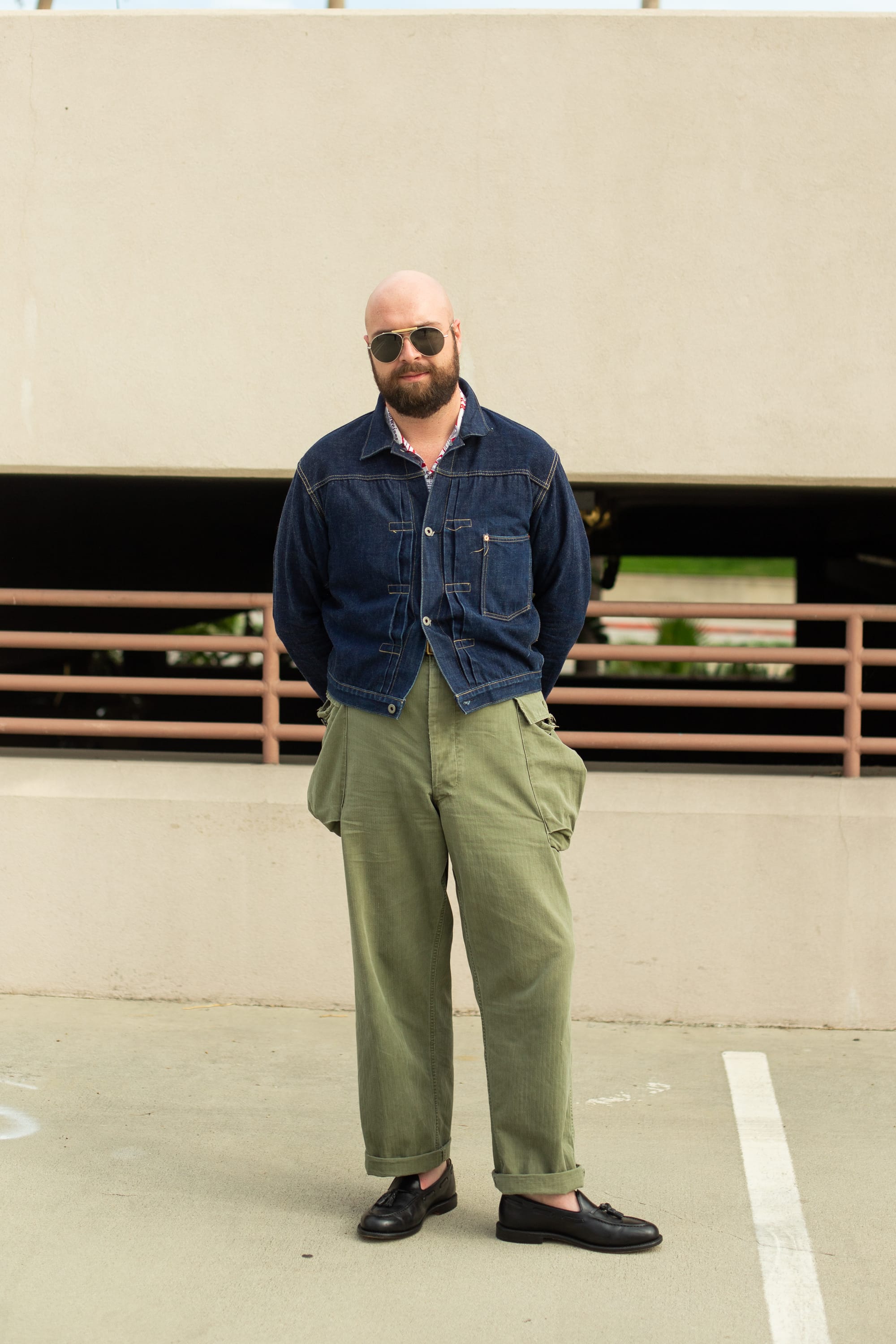
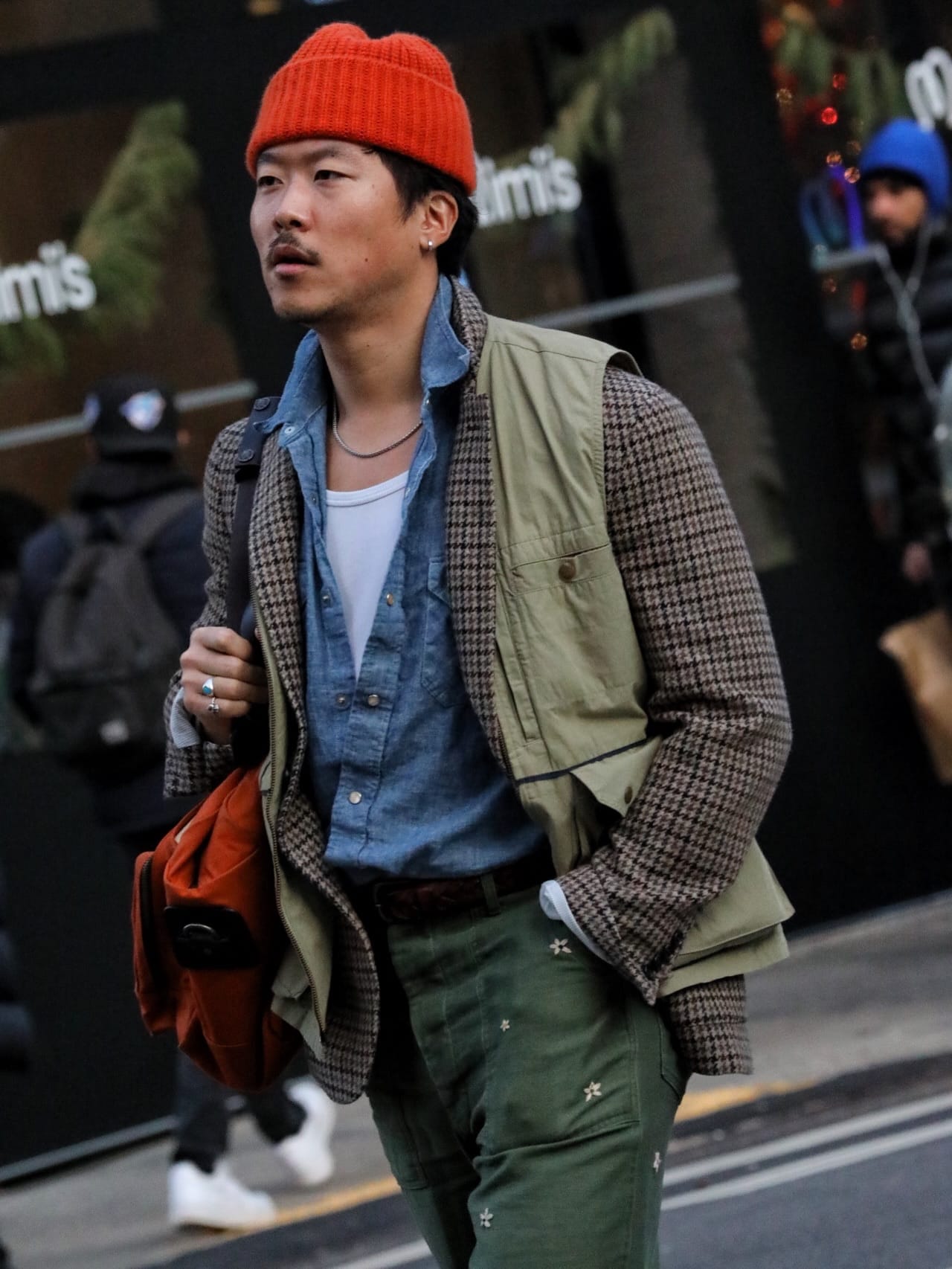
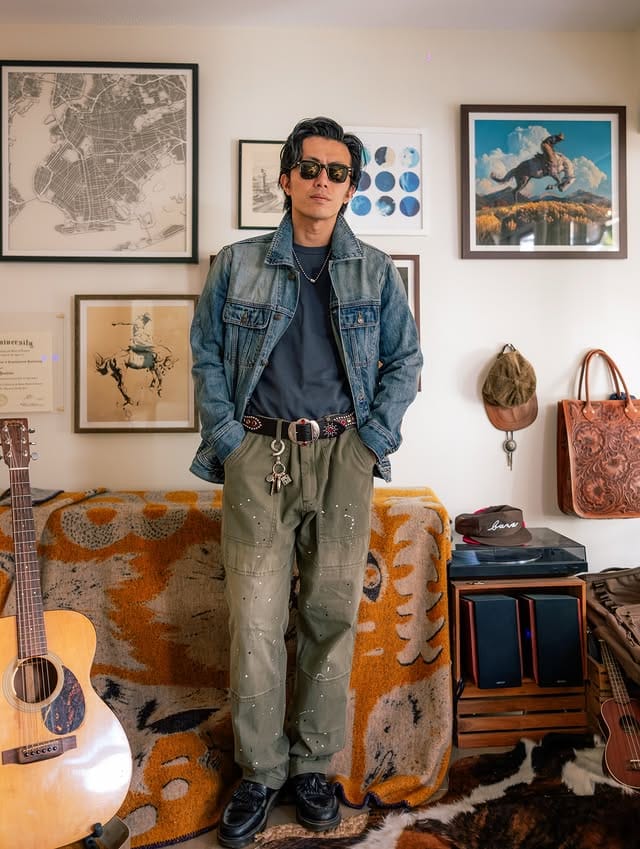
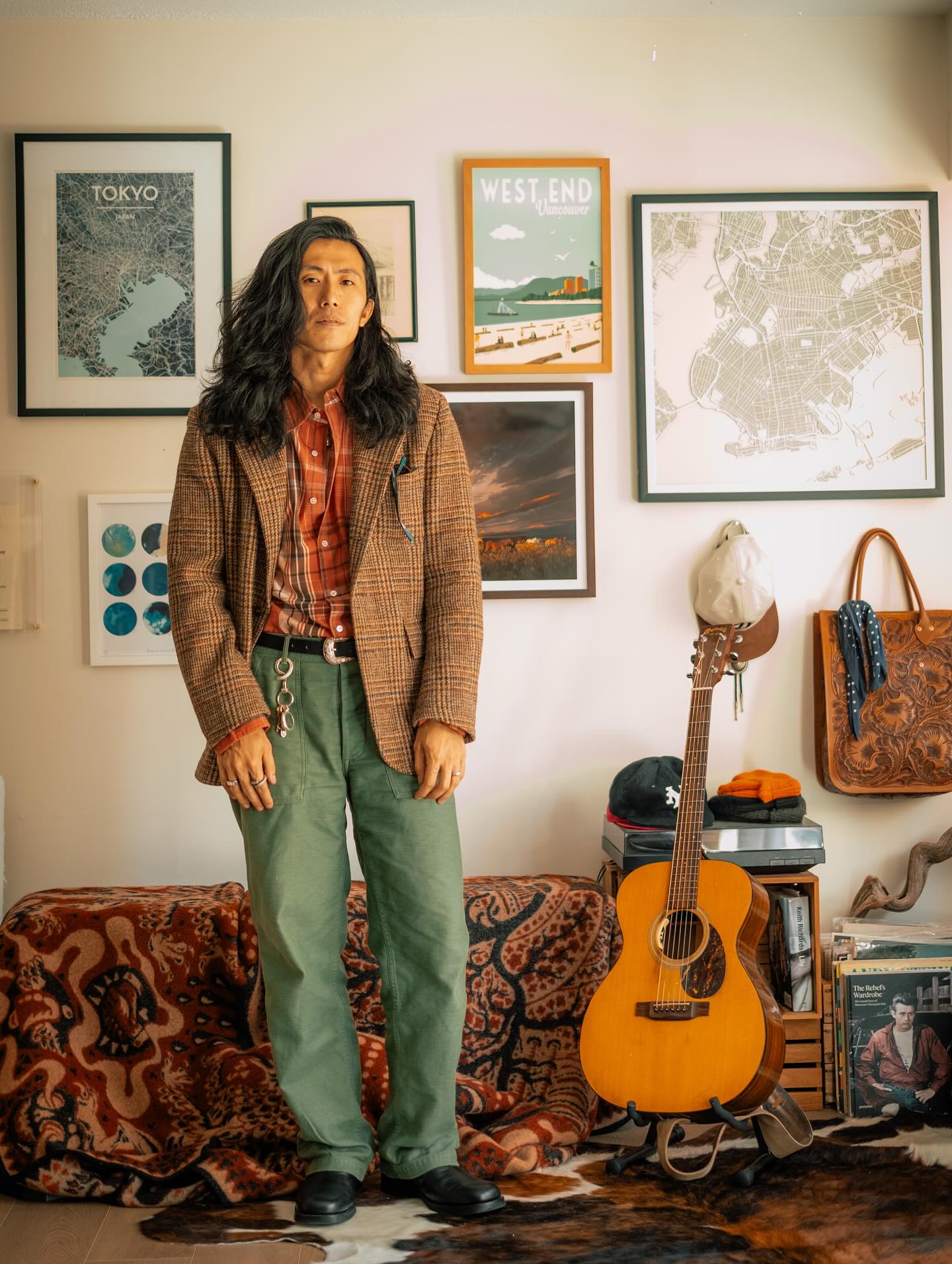
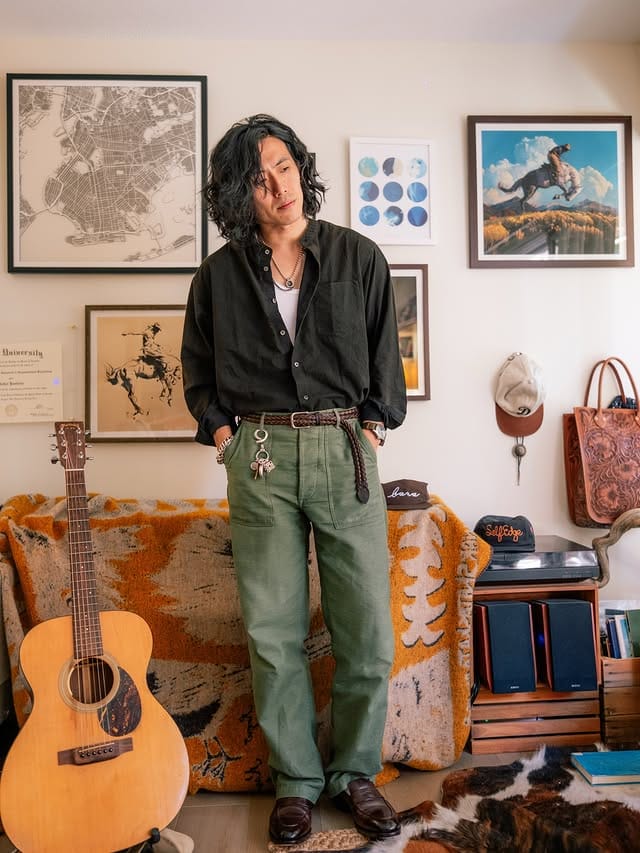
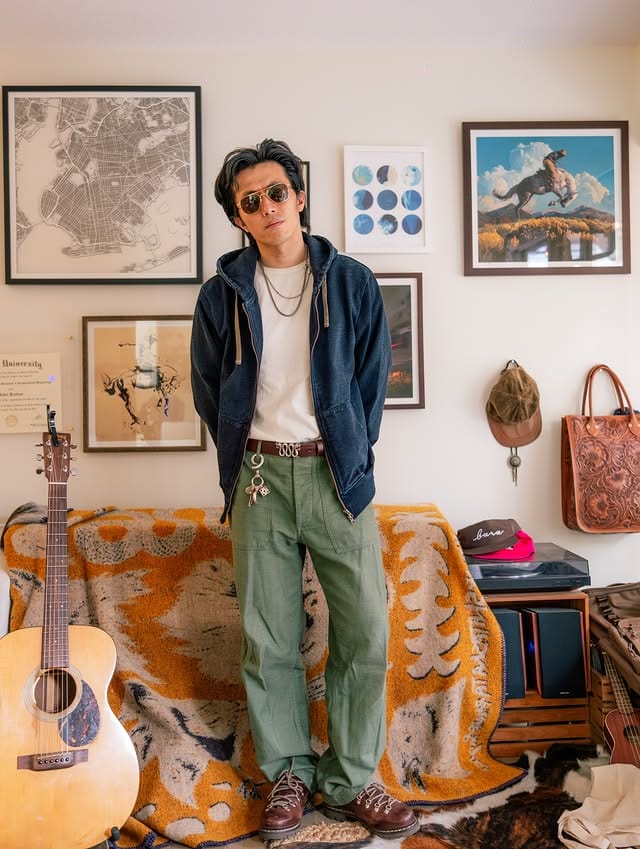
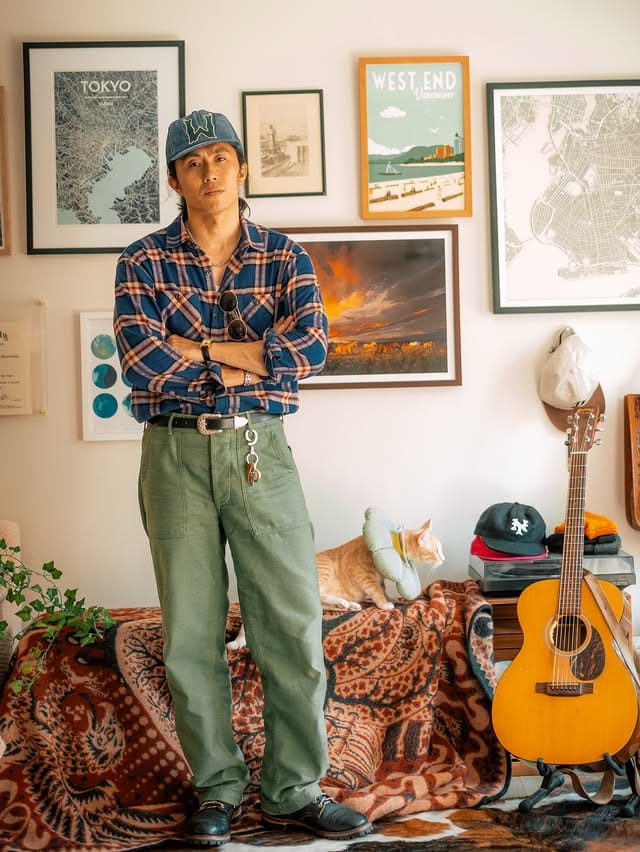
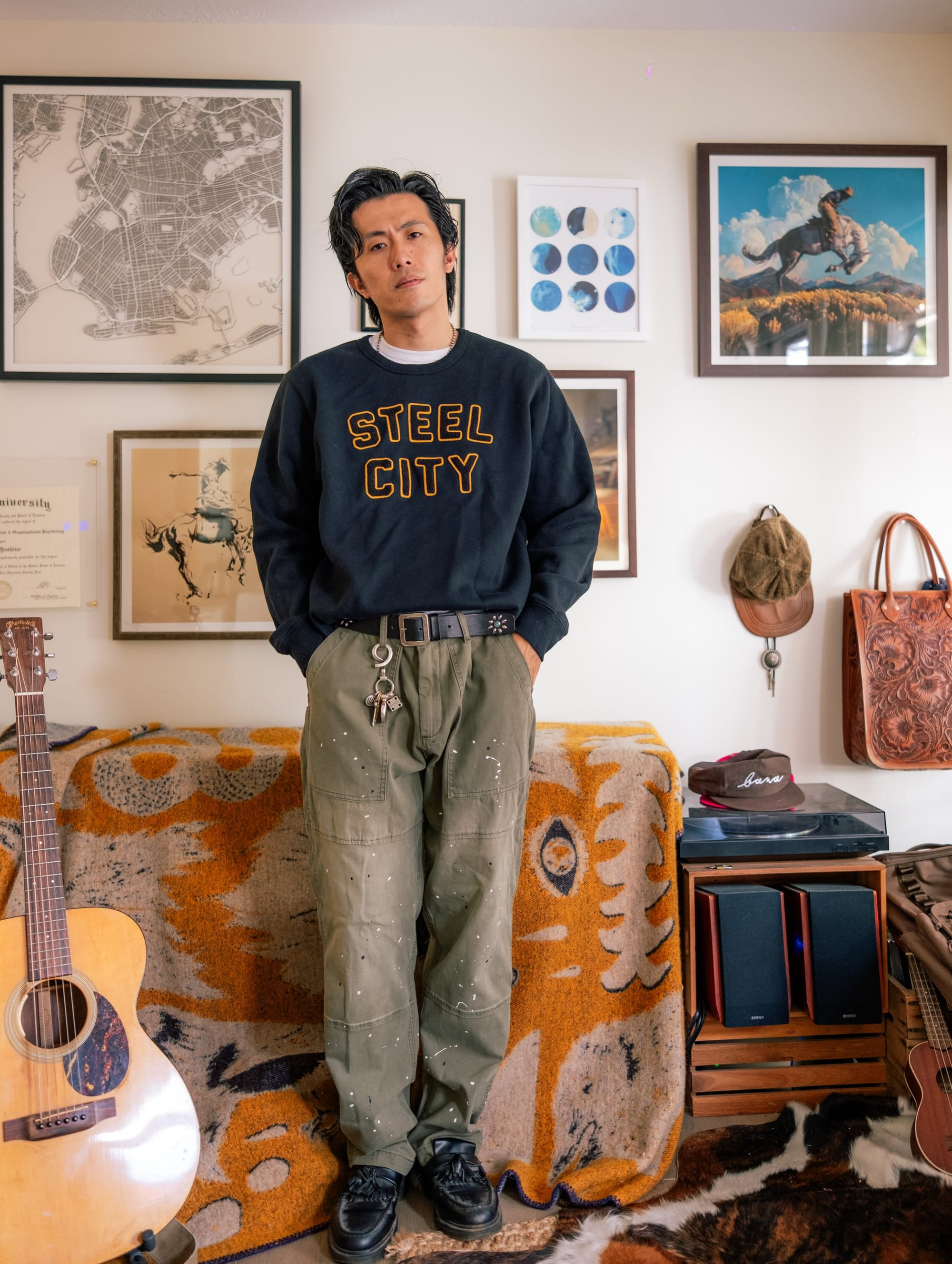
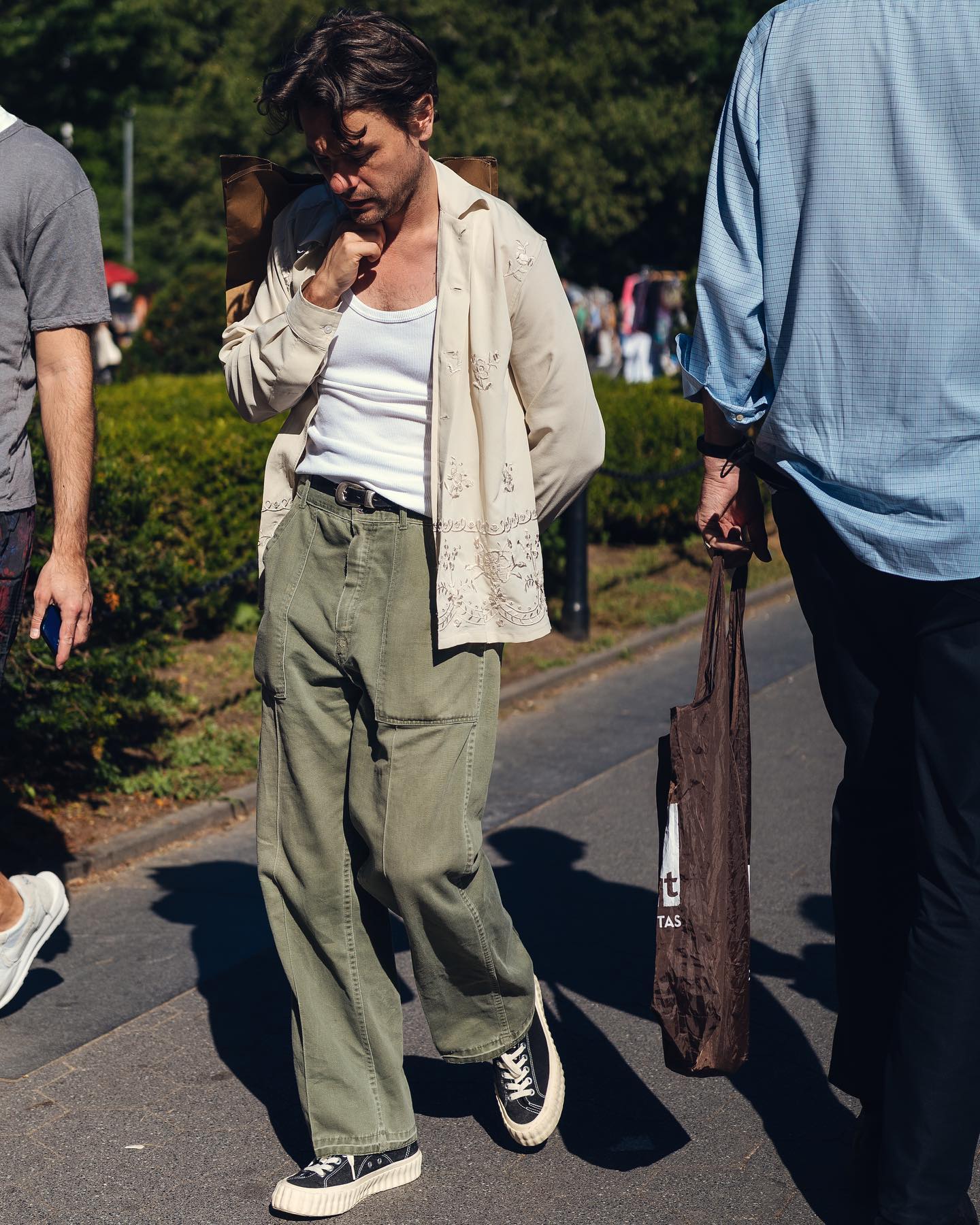
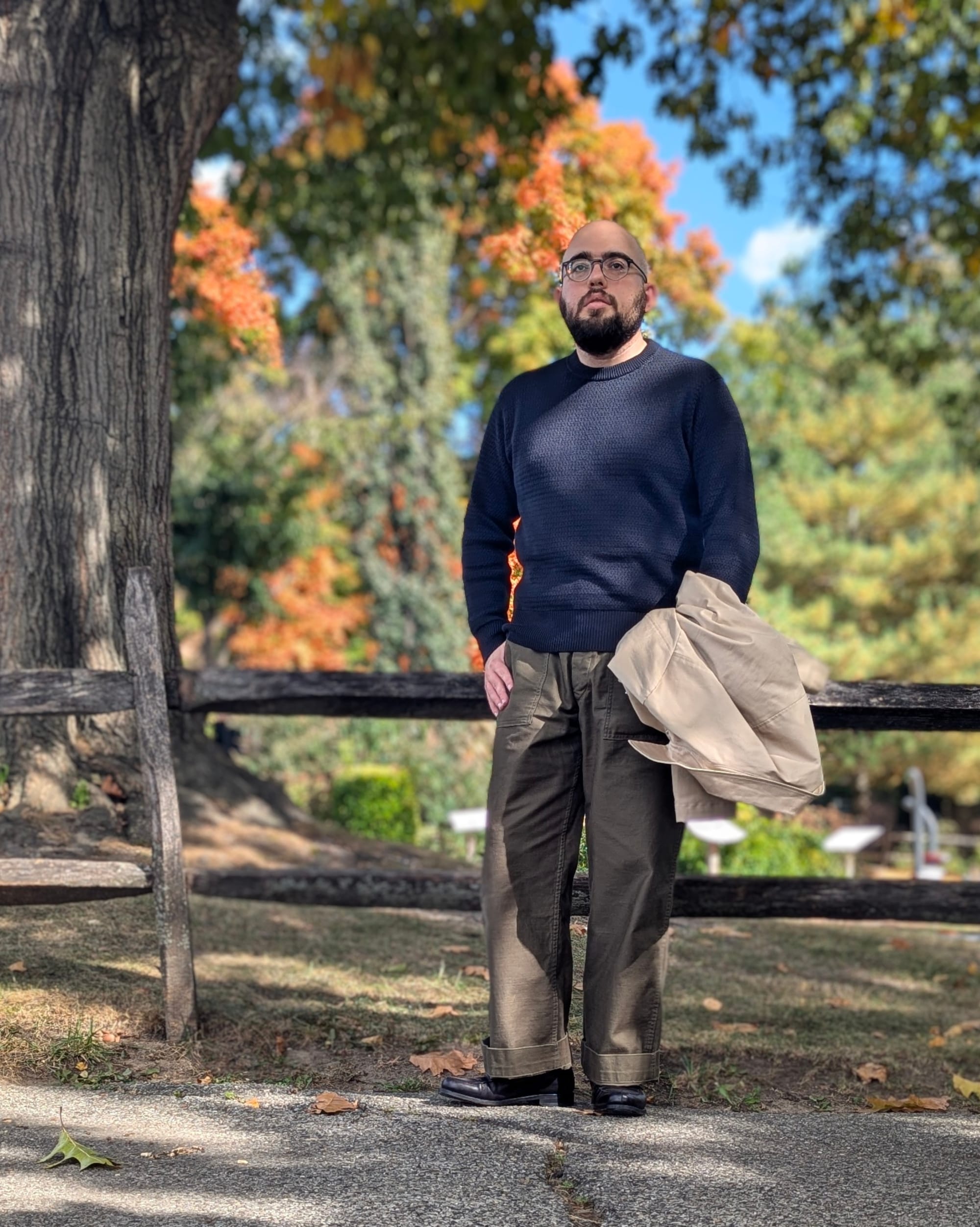
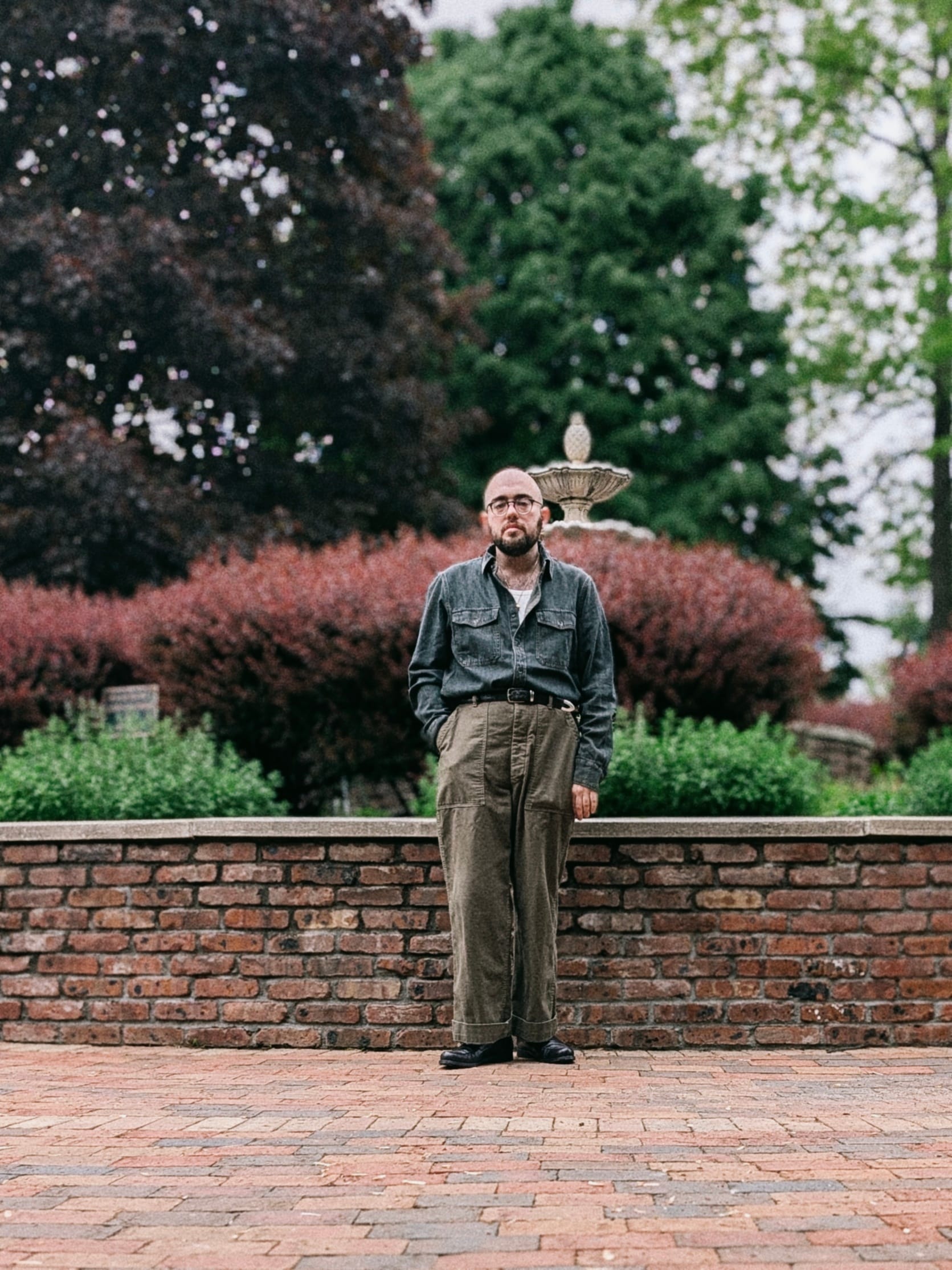
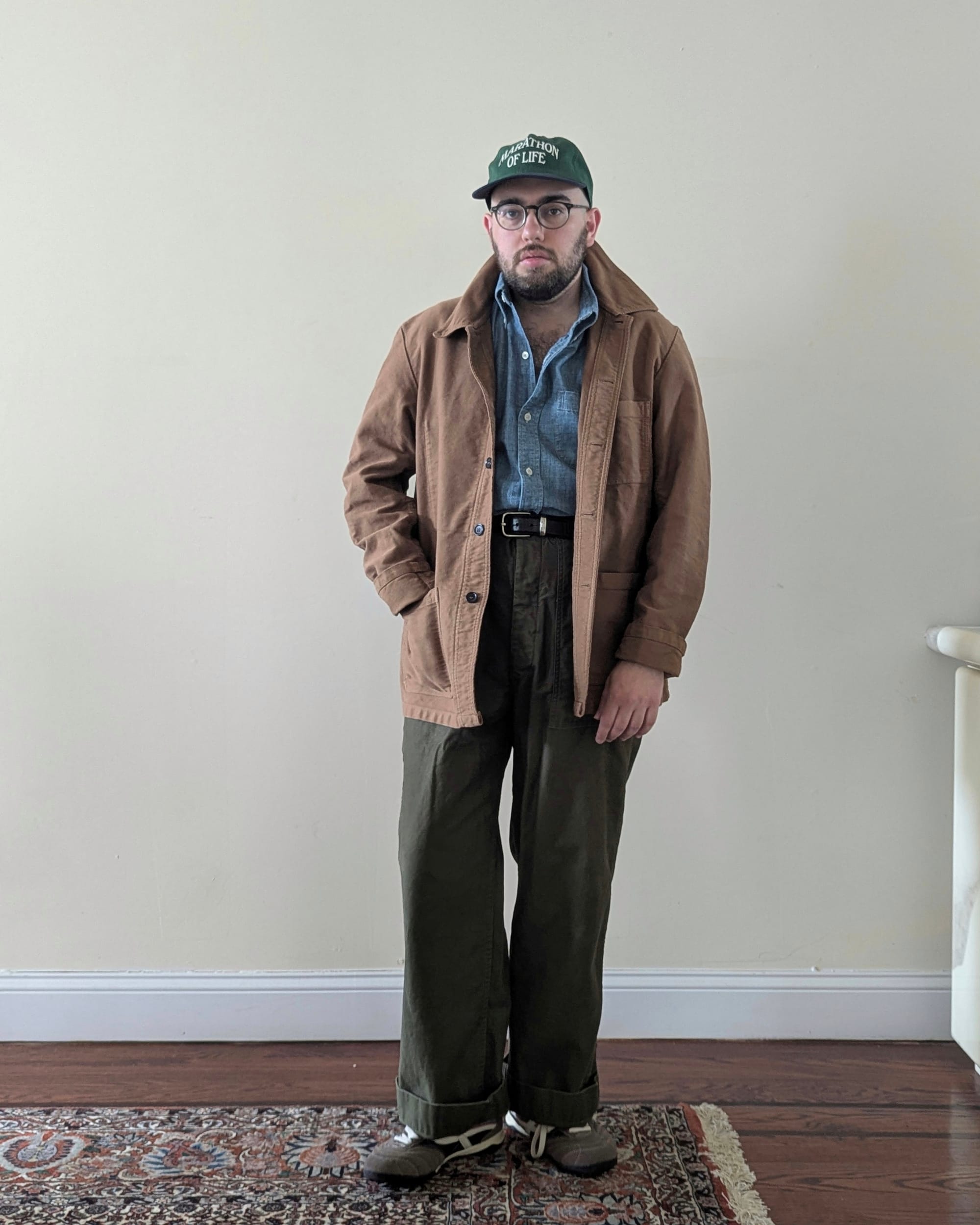
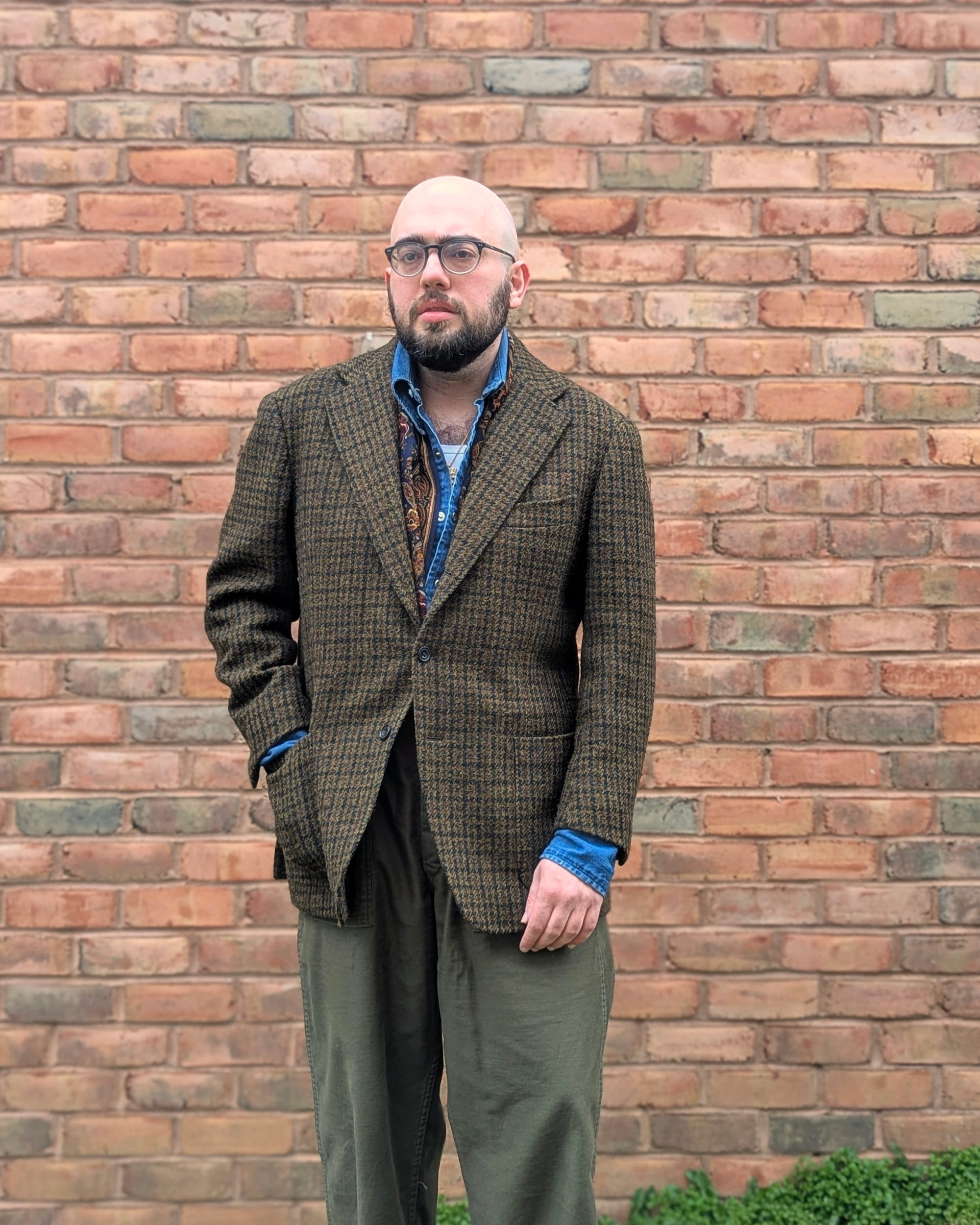
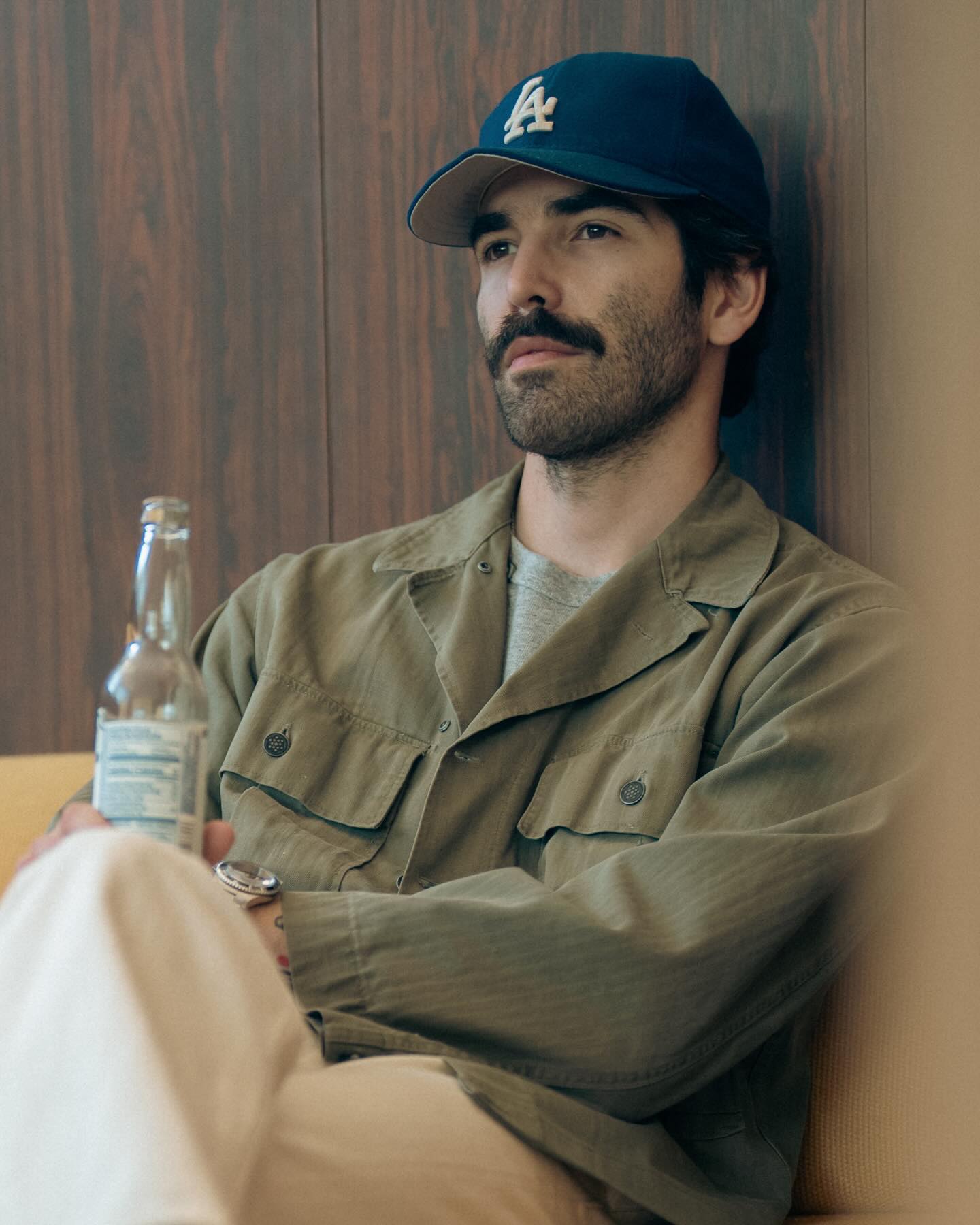
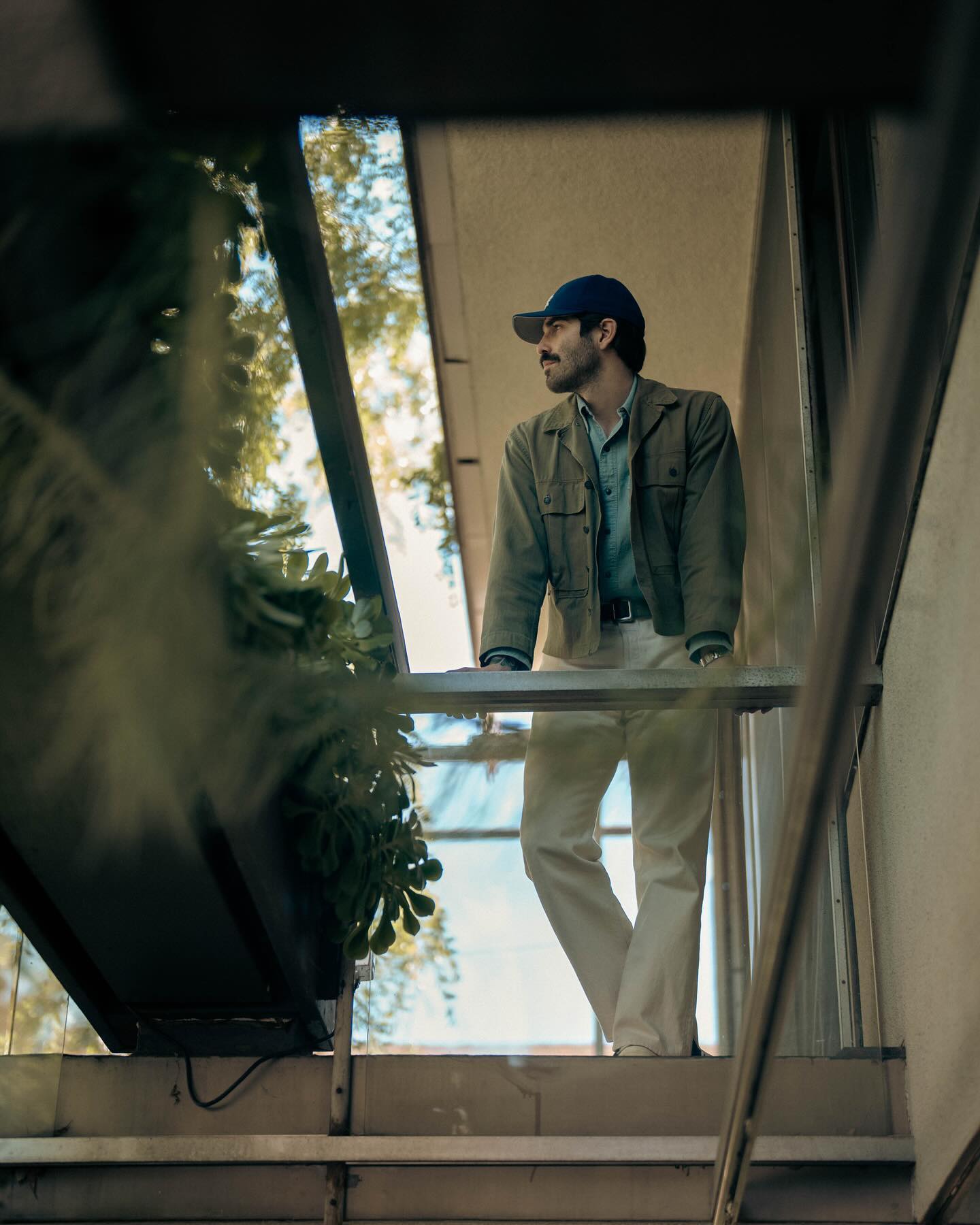
Fatigues are easy to wear. You can dress them up, dress them down. You can pair them with crazy colors, you can wear them with a plain white tee shirt.
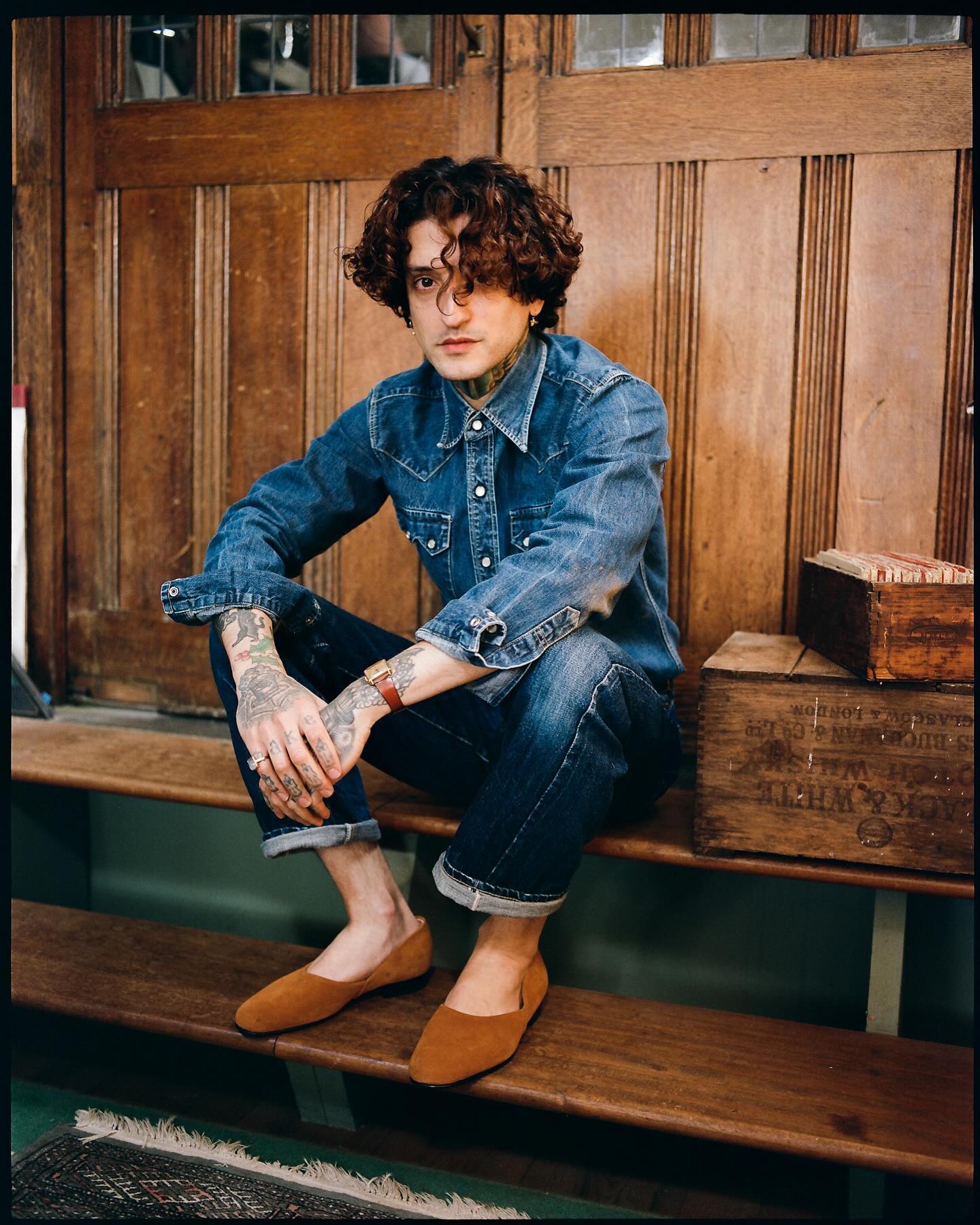
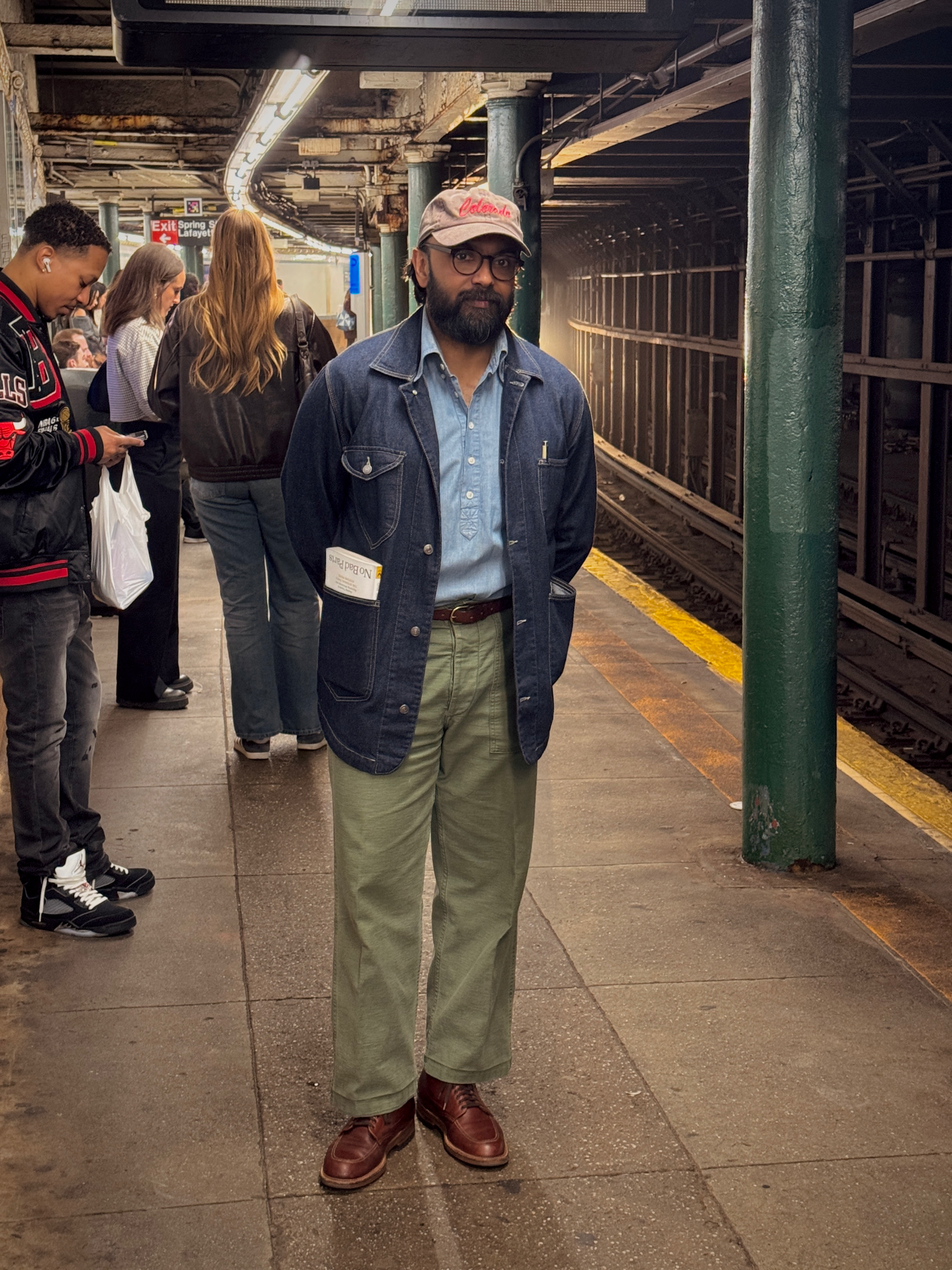
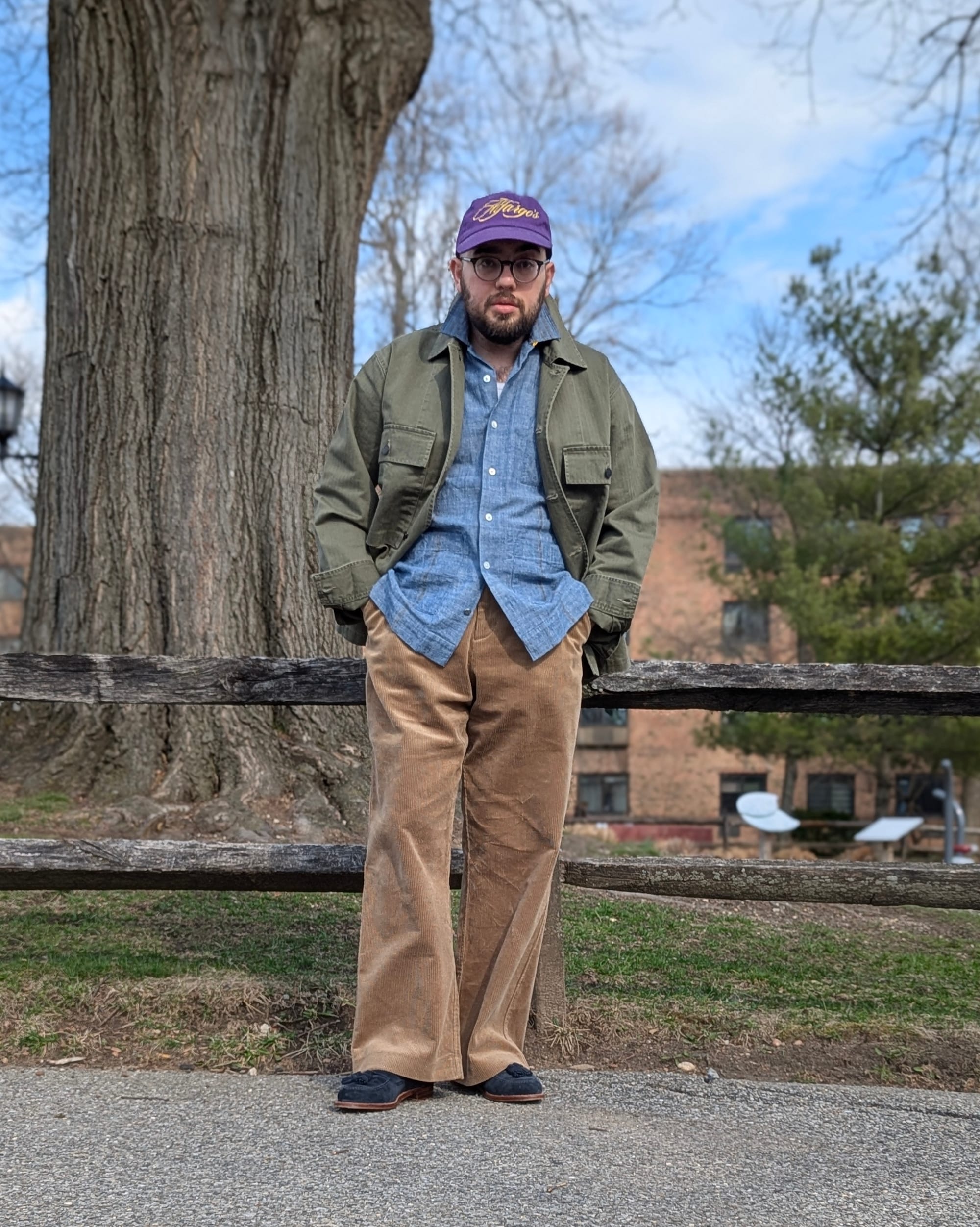
Or you can just go for the safest, simplest fit combination that's still almost always good: fatigues and a chambray or denim shirt. Really trivial combination. If I ever put out a "capsule wardrobe" guide (I think capsule wardrobes are dumb but I'm sure people would appreciate it...), it'll be centered around using that combo as your bread and butter.
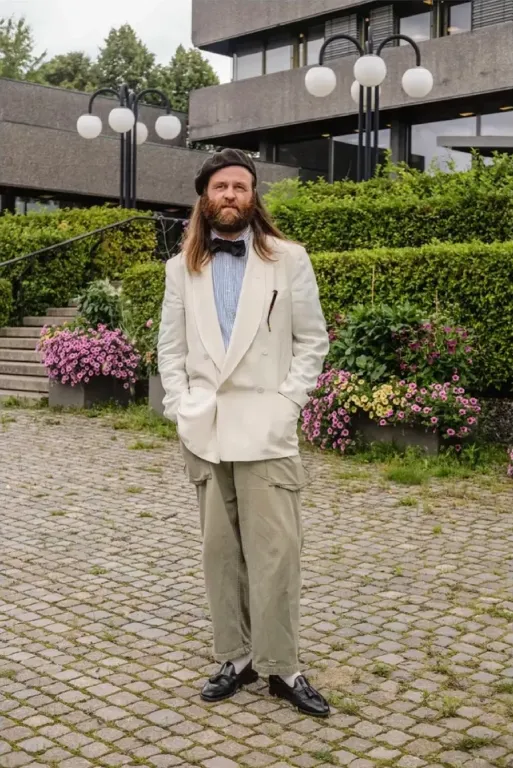
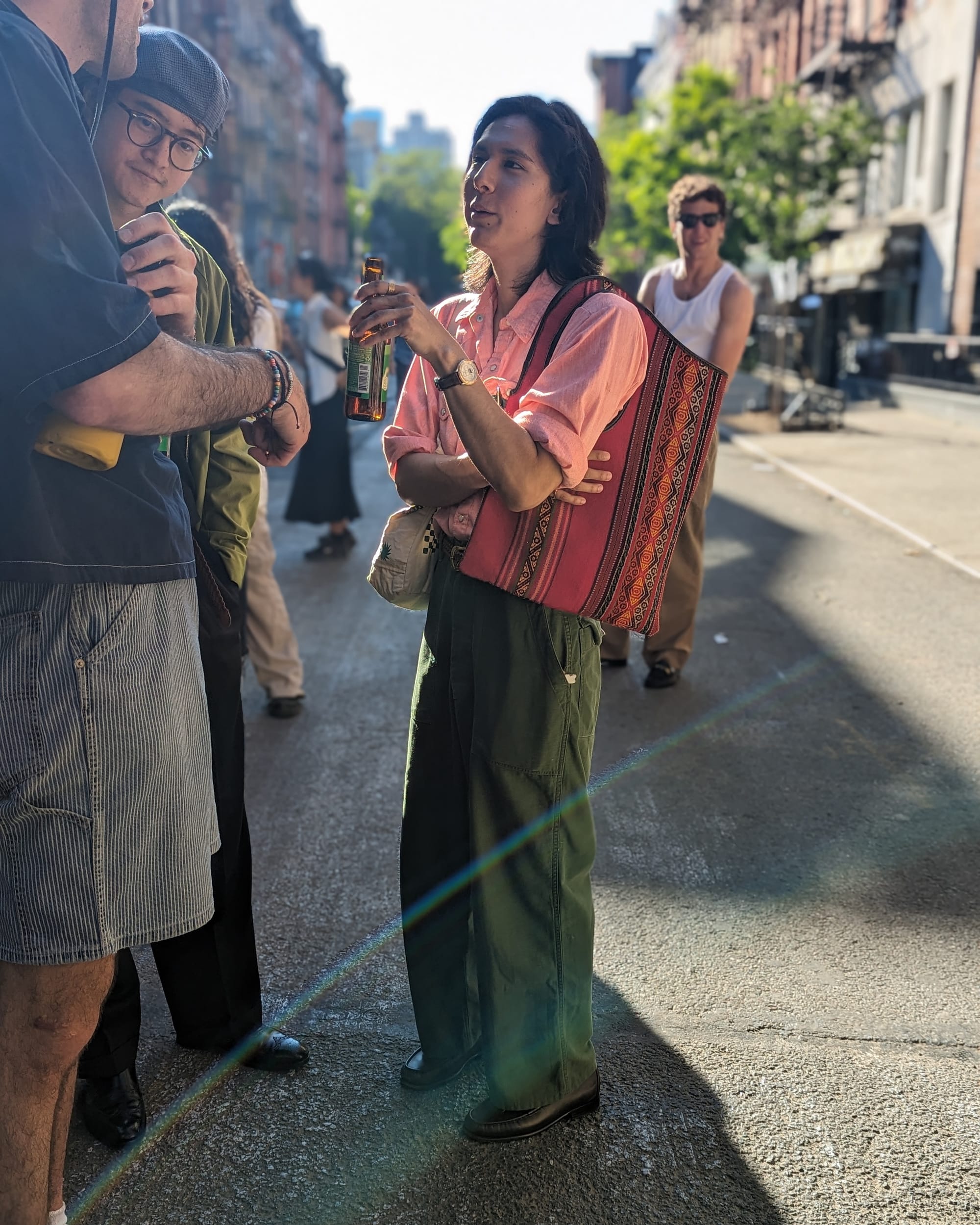
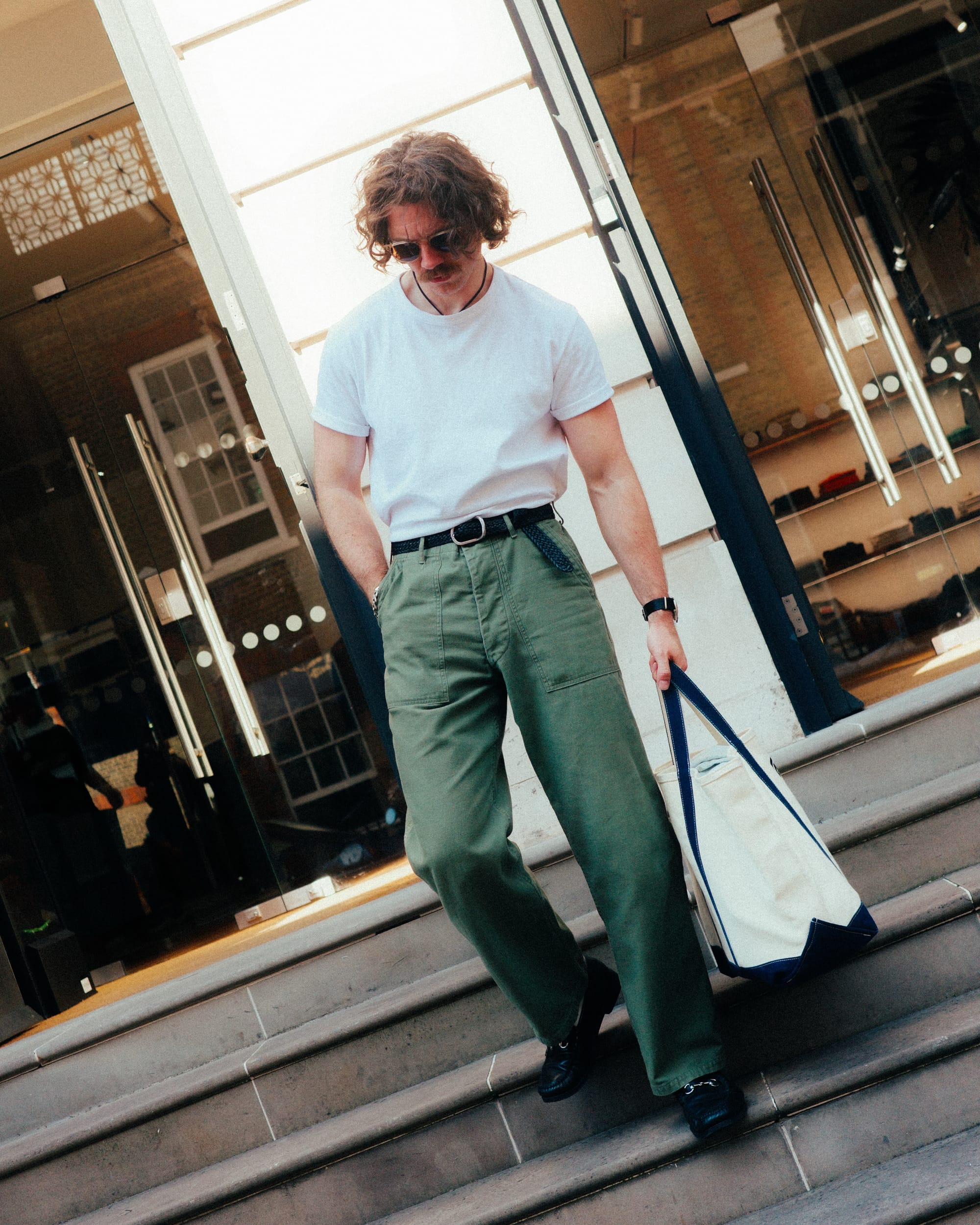
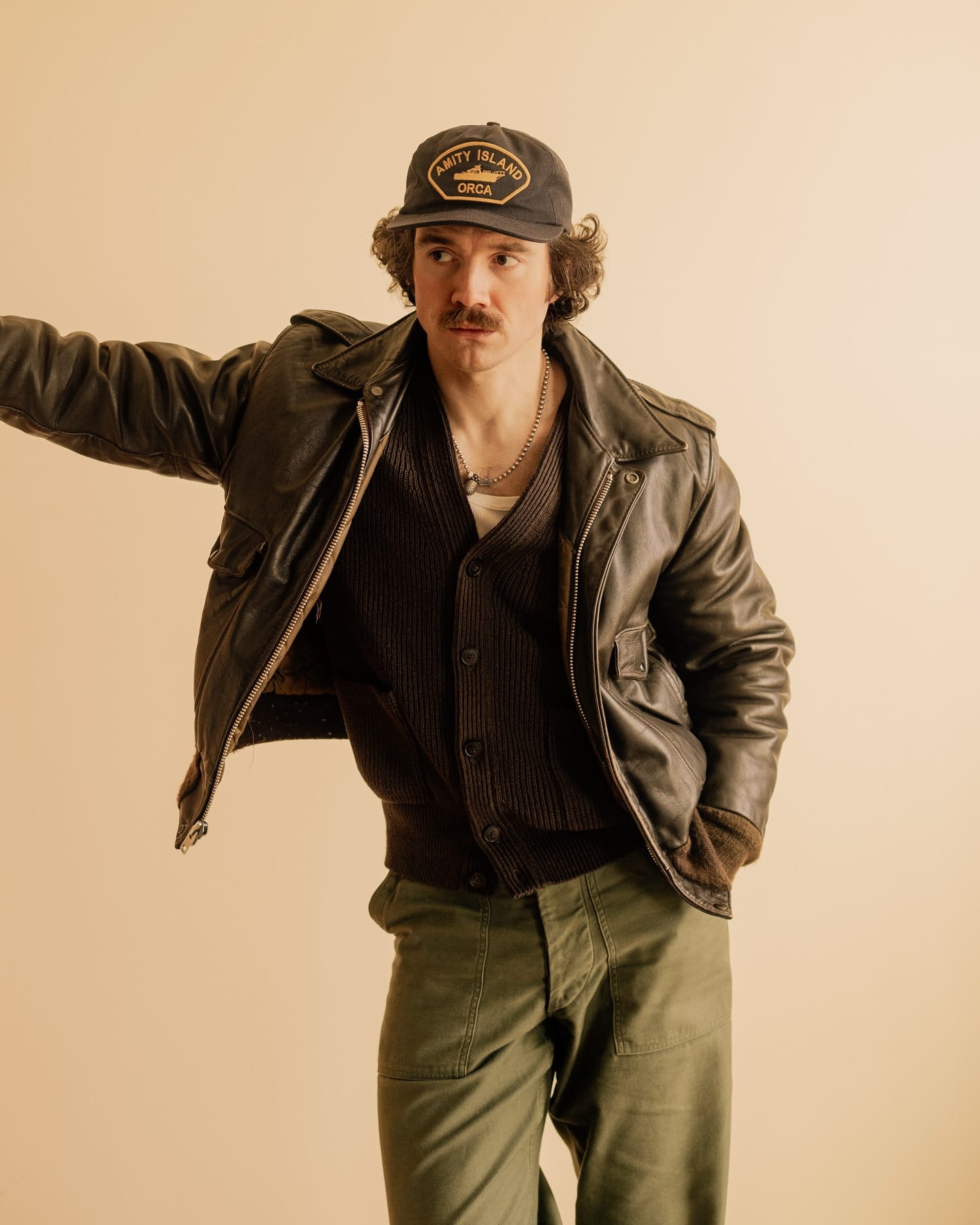
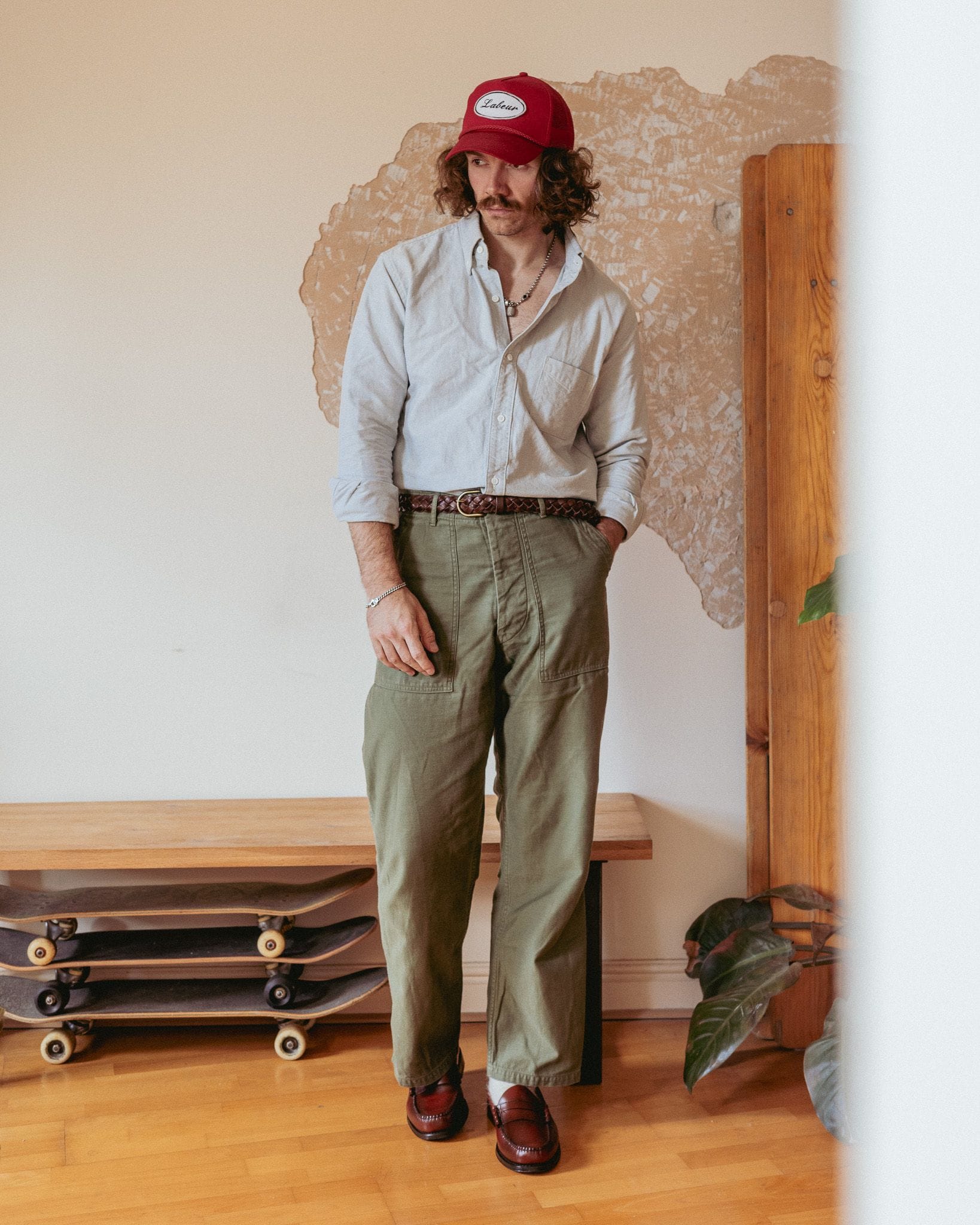
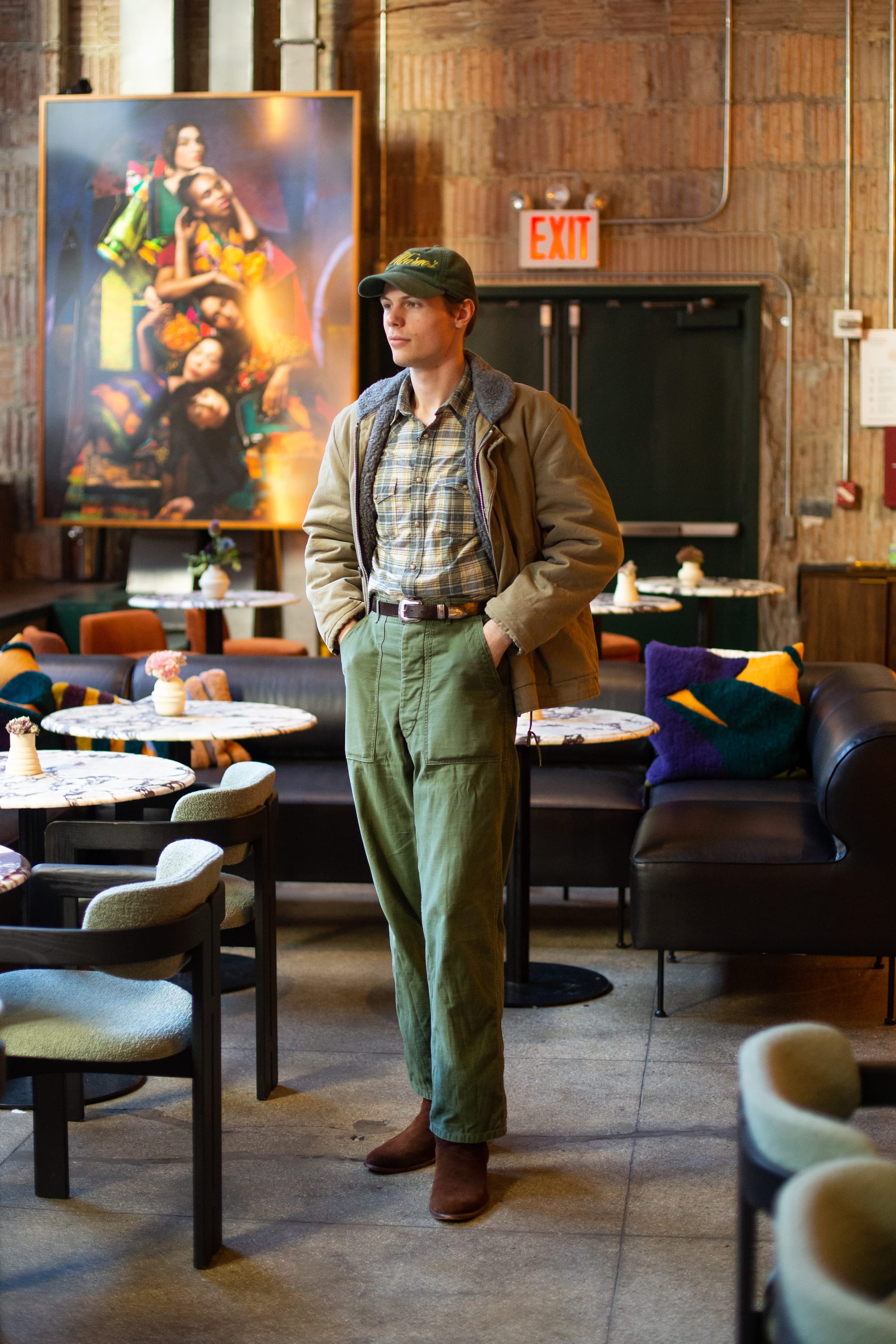
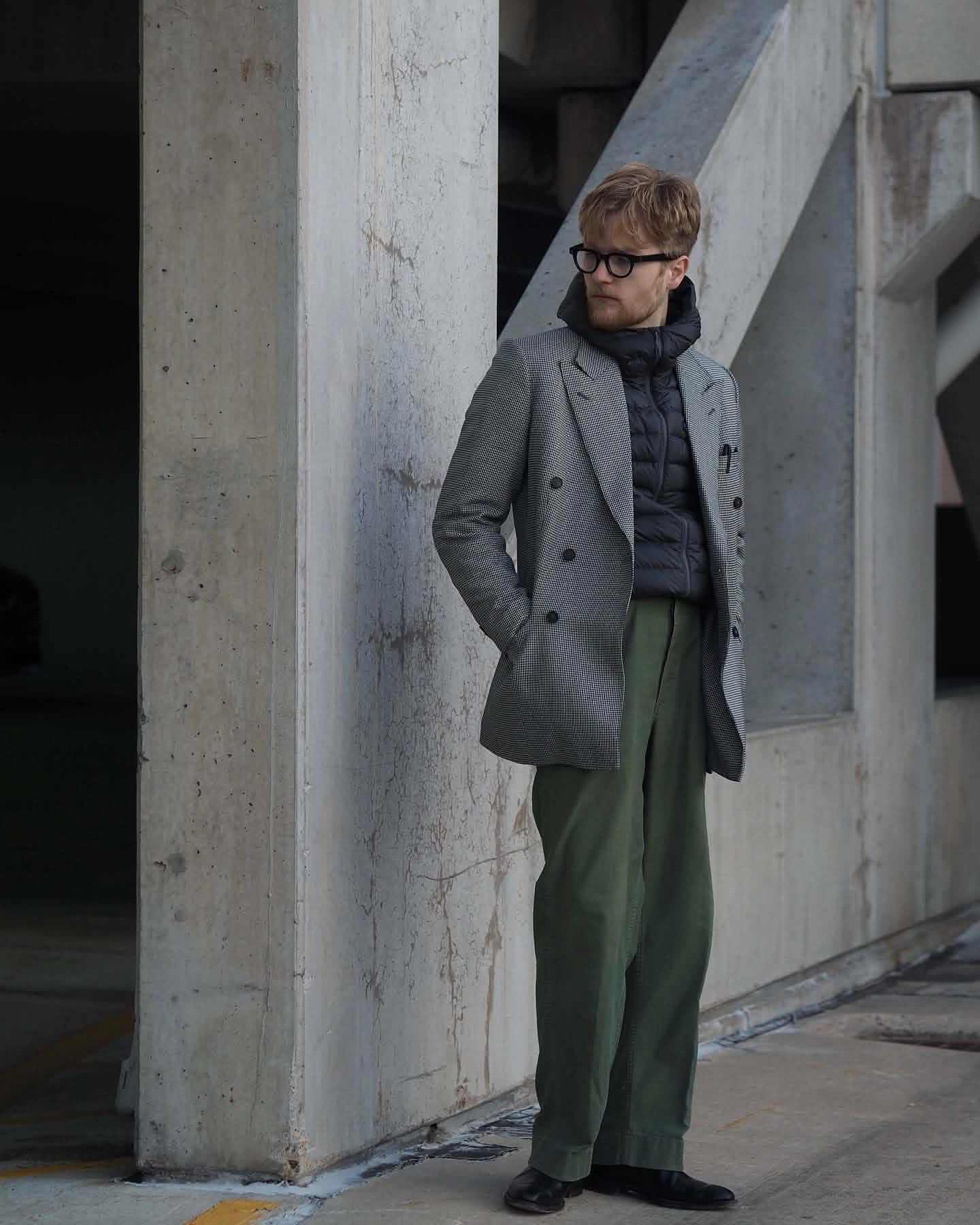
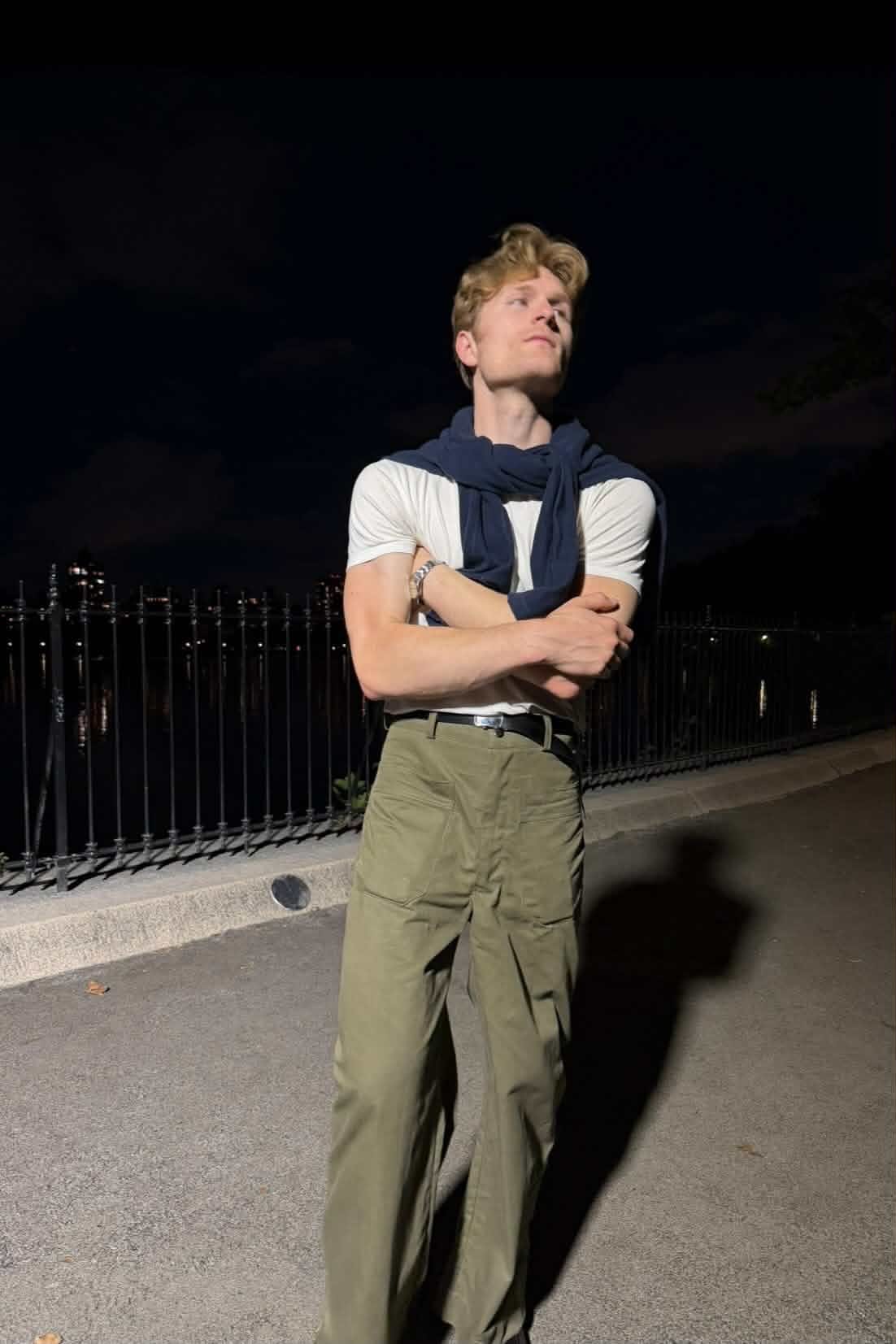
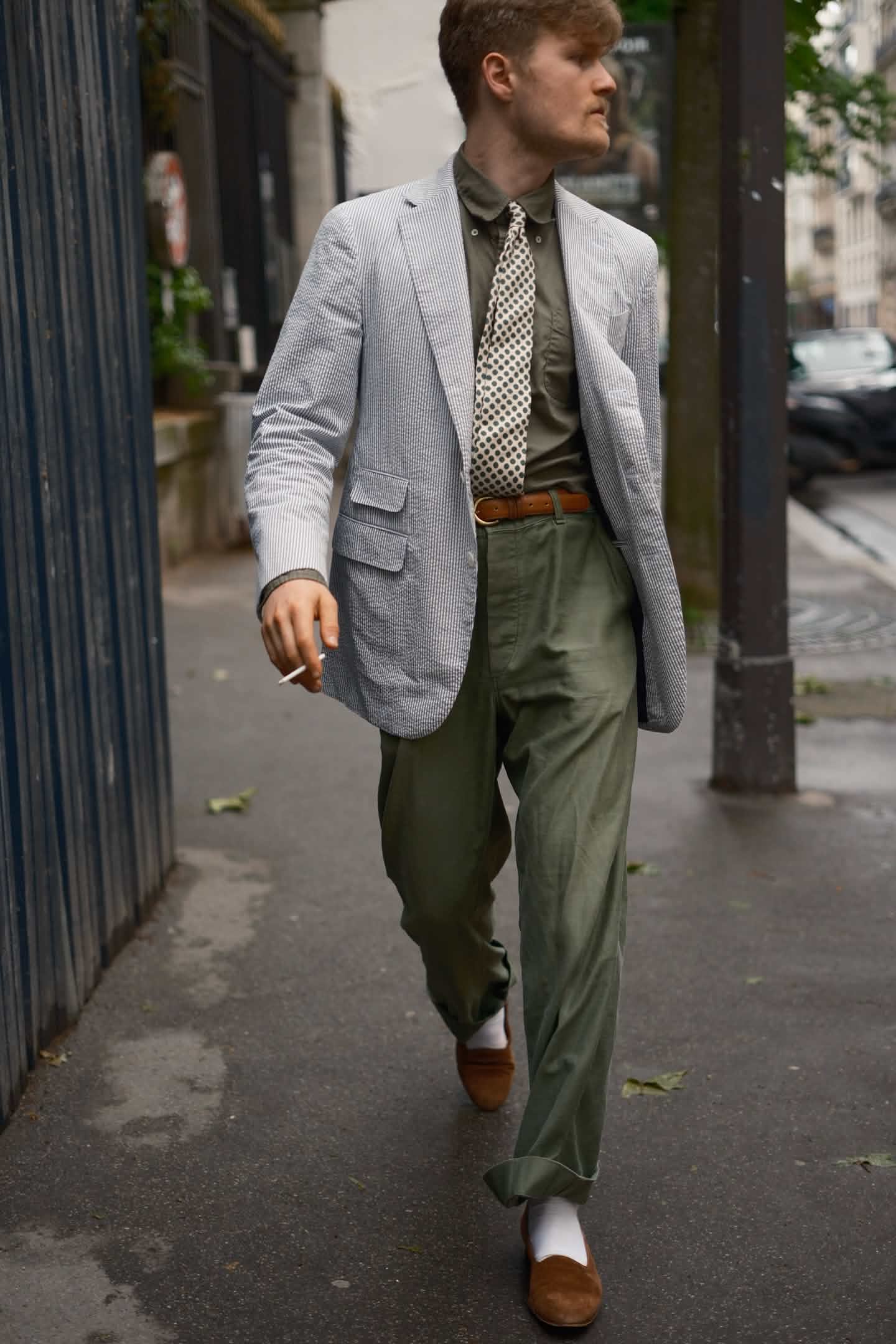
John. Note that John is making fatigues for his own brand, but they're not out yet.
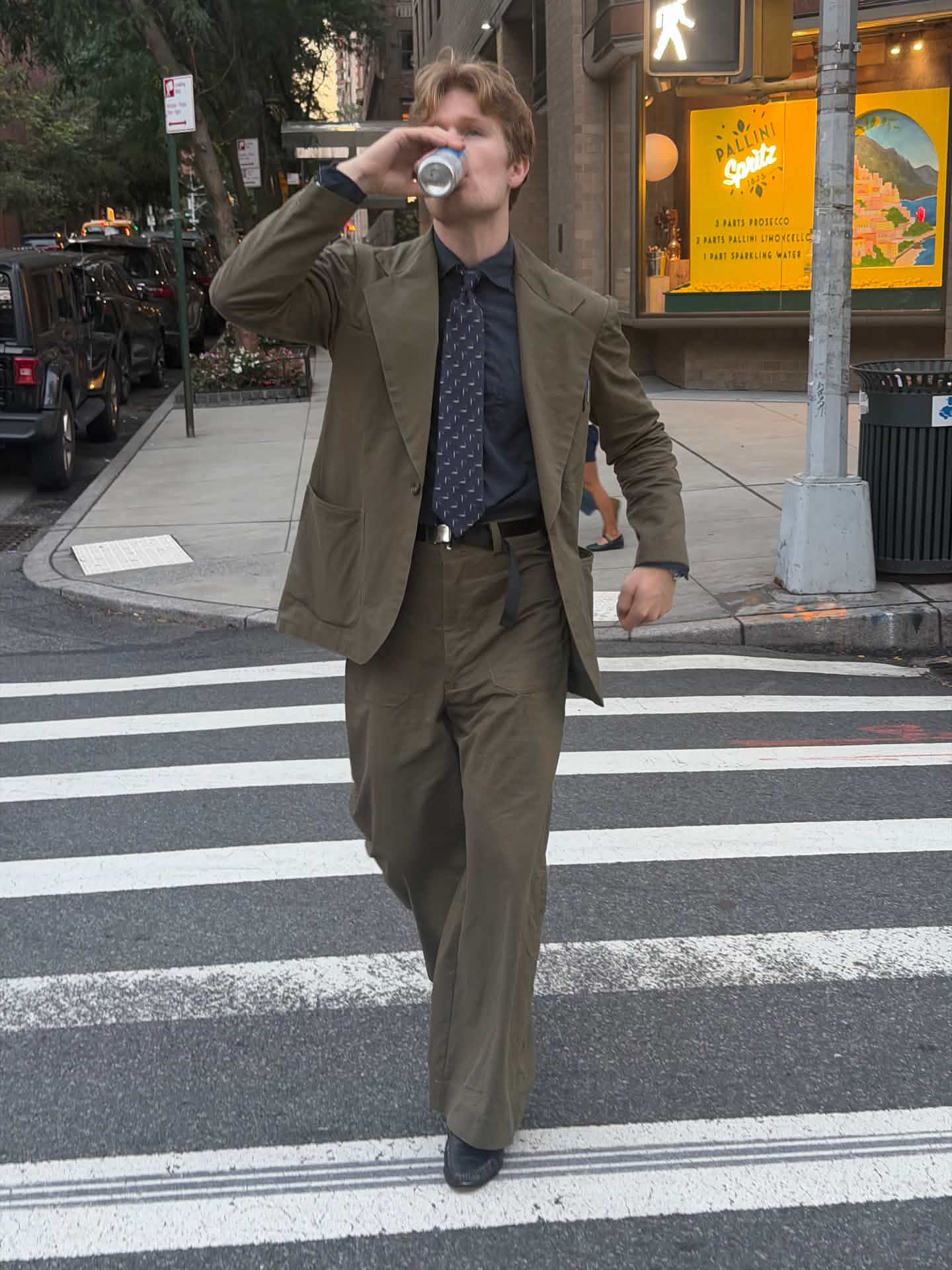
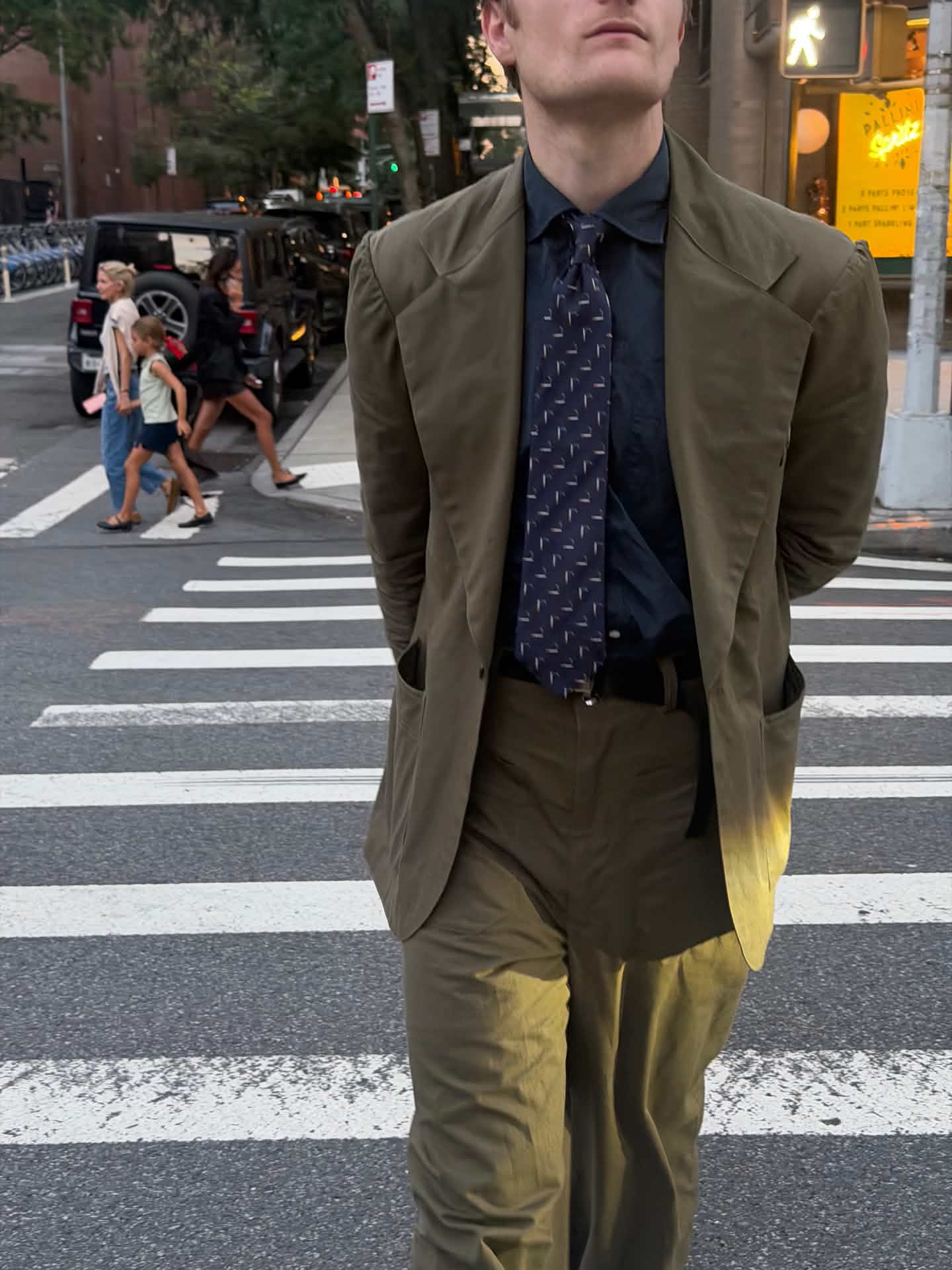
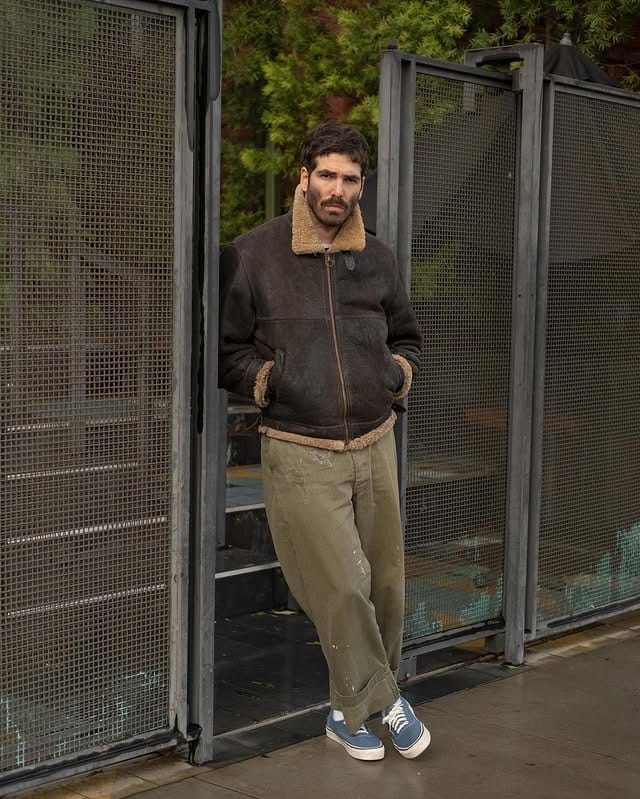
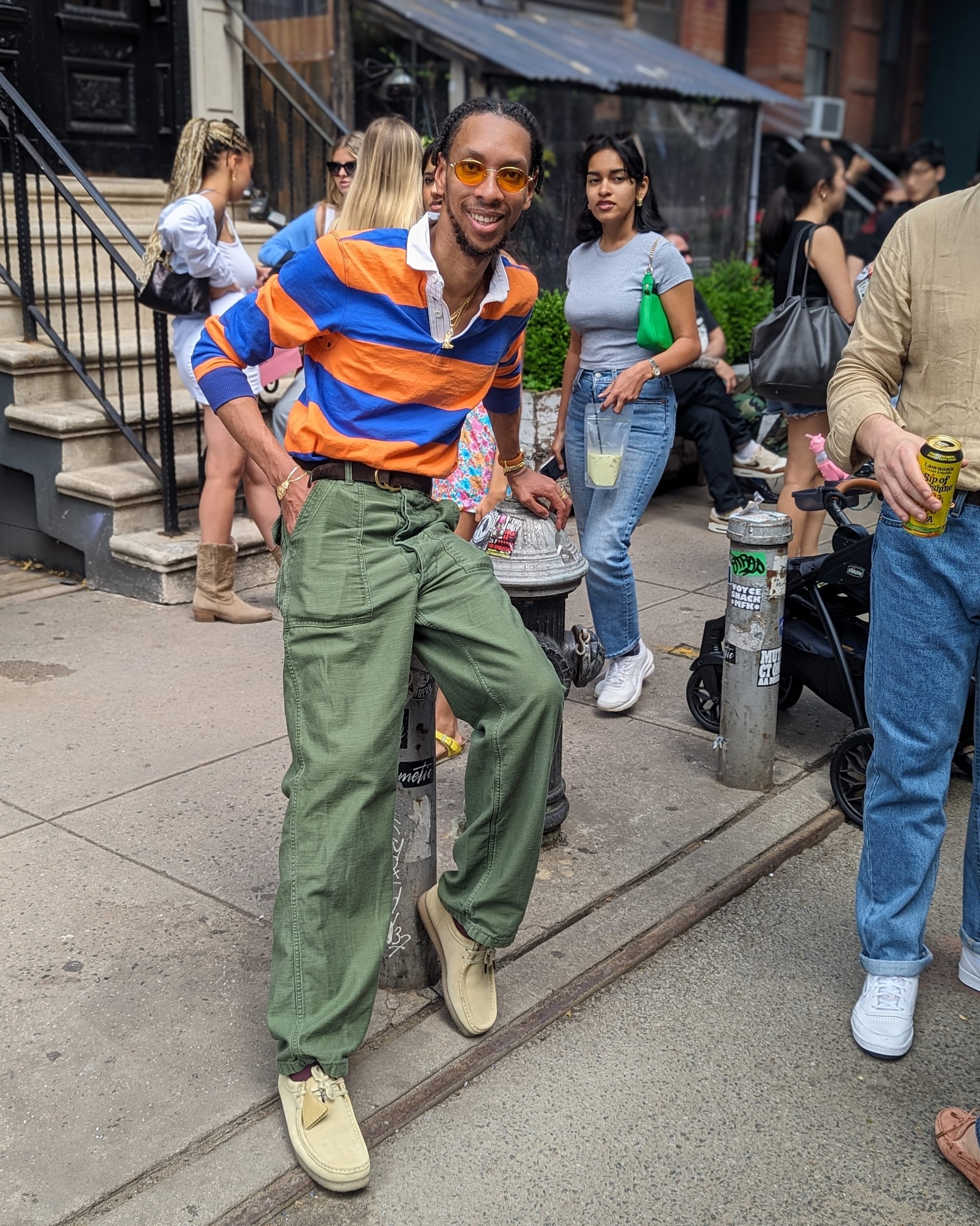
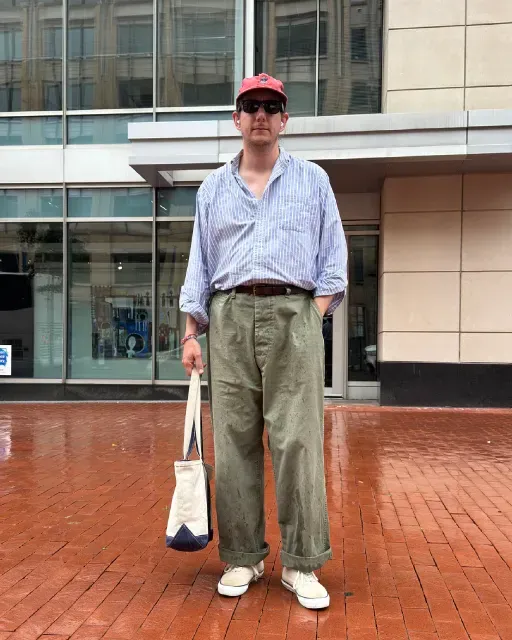
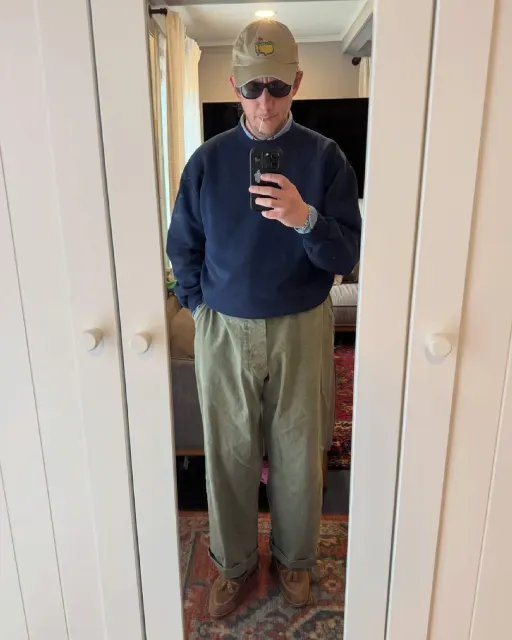
John in poplin field utility trousers. I don't really think of these as fatigues any more than khakis are fatigues (they come from military uniforms), but whatever, it's an inspo album, not academia, chill.
Fatigue Jacket Inspo
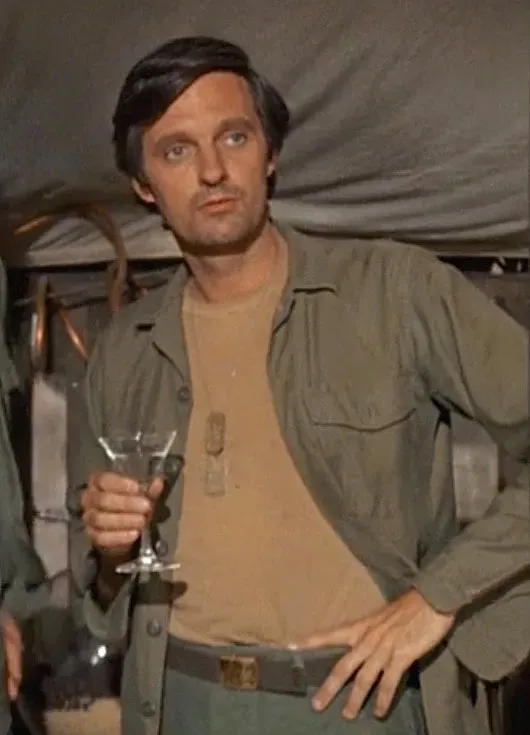
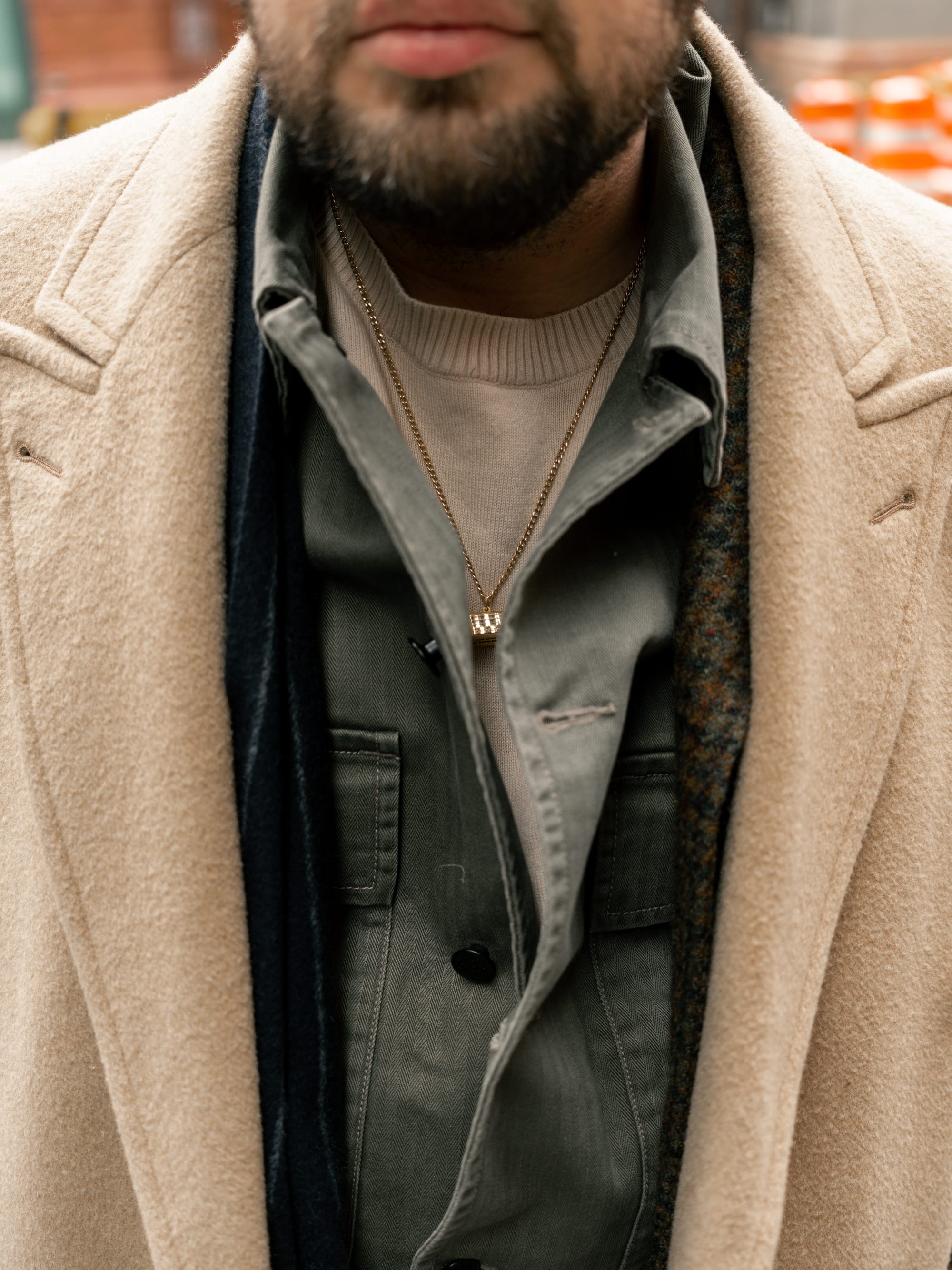
The classic fatigue shirt / jacket / overshirt / whatever you want to call it is another piece worth appreciating. Two bellows pockets on the front, with the inner side of each pocket stitched down so they accordion on the outside to create plenty of room, but still look clean closer to the placket. They generally use the same metal buttons as a pair of fatigues.
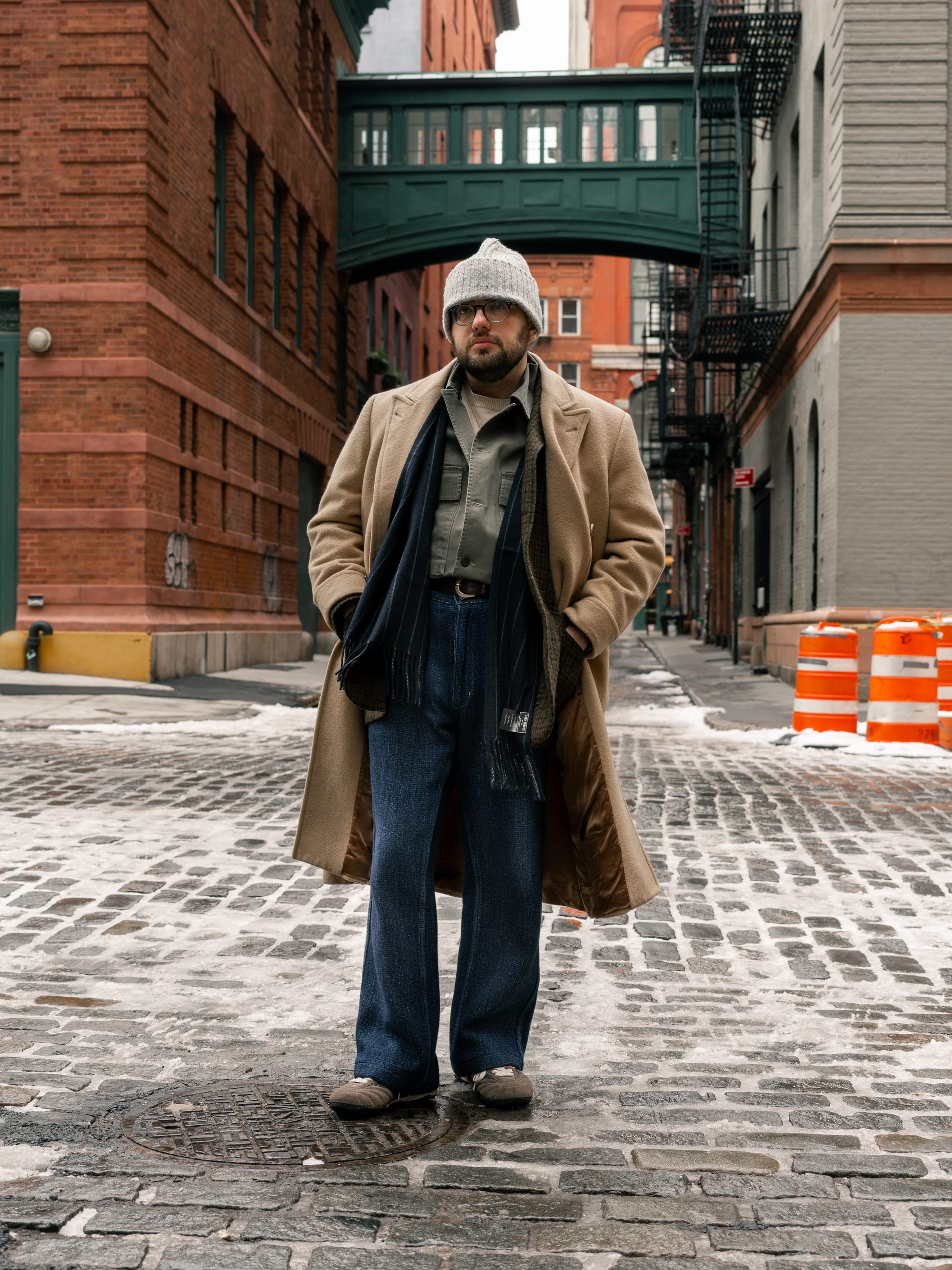
Sometimes you'll see a jungle jacket or an M-65 field jacket listed as a "fatigue jacket." I might include a couple of them here.
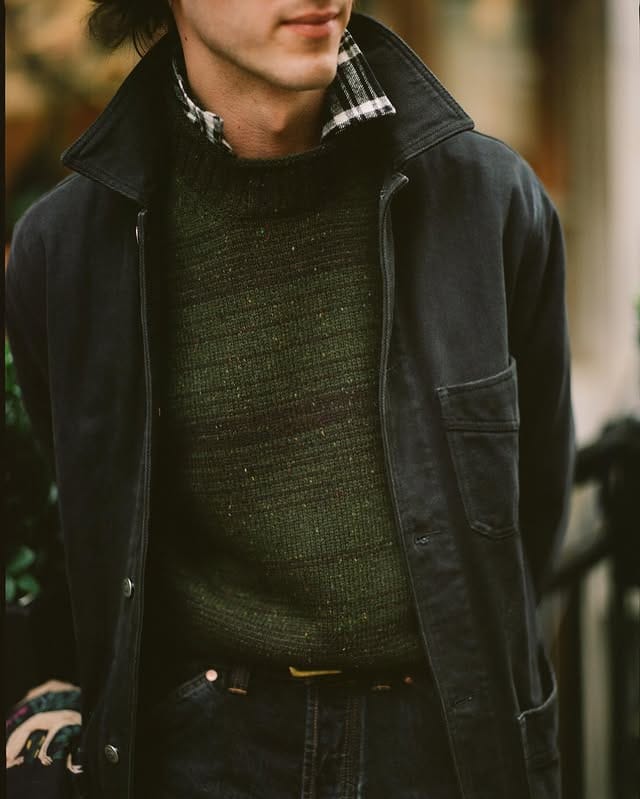
Just as fatigues work great with chambray and denim shirts, fatigue shirts work great with jeans. That said, green outerwear is pretty great in general.
Finally, these are usually cut like overshirts, but... tuck in your overshirts.
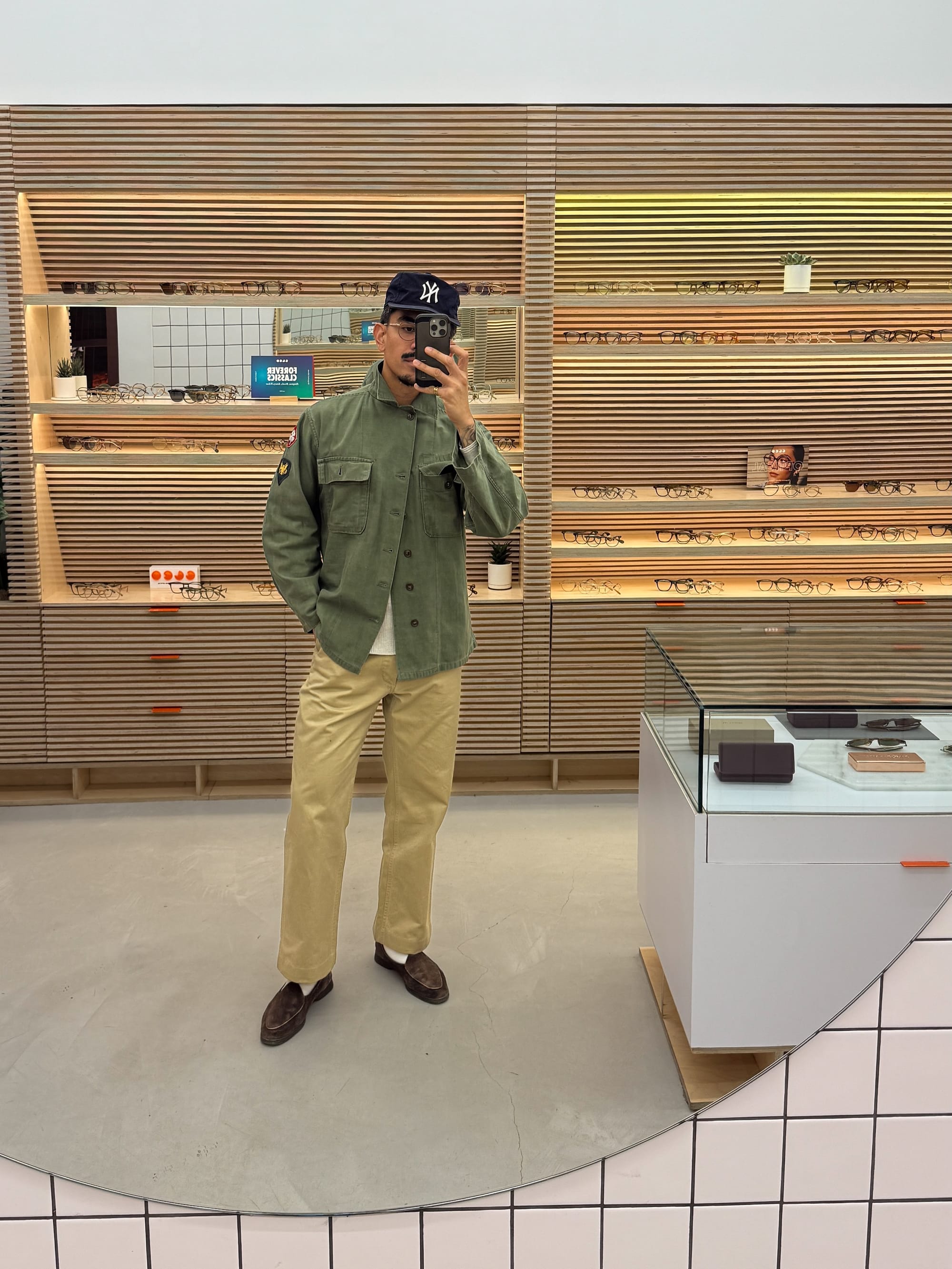



Jon, again
Where to Get Fatigues
some affiliate links below
Under $100
- Secondhand. Buy fatigues secondhand. If you're too lazy to search eBay yourself, I'll include some options for paid subscribers (Jerry- and Elaine-tier only, George-tier subscribers get nothing).
- Stan Ray / Americawear.
- I have no idea how they are still making good pants in the USA at this price point. They have a variety of fabrics, including corduroy, tapered models (gross but I guess it's good that the option exists), and even shorts.
- Jackets, too. The camo fatigue jackets are $110, but still MiUSA at that price point? These are good prices.
- Bronson MFG.
- Chinese company. Not incredible quality, and I cannot begin to guess about their labor standards, but good styles at good prices. Some of these will be sold out. Size up.
- Reverse Sateen - $55
- I own these. My olive fatigue pants above are all these.
- These use plastic buttons. I don't love that. But they're $55.
- HBT; HBT an unusual pocket style; HBT P-44s with Monkey Pocket; HBT P-43s with no monkey pocket
- Red Tornado is similar to Bronson except it's on Amazon.
- Service Works makes "chef's pants," which are basically drawstring fatigues. They also make chef shorts.
- Madewell reverse sateen fatigues are, at the time of writing, on sale for $99. Olive, Ecru, and Brown. The pockets have mitered corners.
Mid-Market
- Ralph Lauren
- Polo Reverse Sateen in olive, black, and "camel." Their sizing is quite inclusive, a 28-44 inch waist options and 30-34 inch inseam.
- RRL HBT Fatigues
- RRL HBT P-44 monkey pants
- Aaannd here's a RRL overshirt in reverse sateen
- J. Crew makes HBT cargo pants that are pretty clearly modeled after P-43s, but with a couple of normal pockets above the cargo pockets. The cargo pockets are still pretty high up.
- Wallace & Barnes does this HBT fatigue shirt.
- OrSlow gets a lot of praise. I don't own anything from them, but I assume the praise is mostly well-founded.
- The Real McCoy's
- P-44s in HBT
- A P-44 Utility Shirt with a "gas flap." Anyway, this one also has a slit that lets you reach into the right side of the jacket. Pretty cool.
- Left Field reverse sateen is really solid, and it's made in the USA.
- So is Imogne + Willie. It's pronounced "Imogne," by the way.
- Paul Smith HBT fatigues with a slight twist: they have a crease pressed in the front. You can do this at home if you're patient with an iron, or ask your tailor to press it in... And a crease tends to fall out of cotton pants relatively fast, depending on the fabric, whether starch was used, how it was pressed in, etc... but it's an interesting twist on a casual classic from a smart brand.
- Buck Mason
- I have some HBT "baker's pants" from them that I love but I guess they're not in stock right now.
- HBT P-43s in seeded ecru, I love these, also out of stock...
- "Bulkhead dungarees" (denim fatigues) (wait wtf, the link is broken, these are gone too?
- HBT Fatigue jackets (uhhh out of stock at the time of writing, but at least the links still work)
- Olive HBT sport jacket that's... also out of stock, damn it, Buck, you're my best seller on shopmy, how am I supposed to keep that up if you won't stock your best stuff?
- Allevol HBT Baker's Pants
- Papa Nui HBT fatigue jacket (and they also do camo).
- Engineered Garments heavyweight cotton ripstop.
- Buzz Rickson's
- Negiborhood black fatigue shirt
- Jelado HBT Fatigue Jacket. Darker shade of olive than a lot of these other HBTs.
- Merz B. Schwannen does really wide fatigues in olive, black, and yellow "sateen canvas." There is no such thing as "sateen canvas," as far as I'm aware, but whatever, people make up terminology all the time in this industry...
- East Harbor Surplus does reverse sateen fatigues and shorts with fatigue pockets, too.
- Madewell HBT in "olive" and "pepper"
- Nudie Black Sateen P-43s come in inseams up to 36 inches, if you need that.
- Noah Pleated Fatigues. Fatigues aren't supposed to be pleated but whatever, I'll give these a pass. The next pair is... also pleated...
Unique Fatigue-Inspired Stuff
- Kapital "Liberty Hickoree Fatigue". Patchwork fatigues in a fabric that looks like hickory stripe, but idk what it actually is, if it's anything. Single forward pleats along the pocket. Weird. Cool.
- Kapital Reversible Hunter Camo Fatigues (gigantic)
- Cotton Twill Fatigues from ts(s) with a fleece layer on the outside so I guess they're kind of sweatpants?
- Monitaly has a take that... those might be a slight drop crotch, I'm not into that, but I'll list them anyway in case you are.
- OrSlow fatigue shorts in white cotton
- Needles H.D. fatigue pants. Gigantic. Unique shape.
- Buzz Rickson's combat fatigue shorts
- Taylor Stitch does drawstring fatigues, and this particular sashiko-inspired fabric looked cool to me.
Secondhand Fatigues and Fatigue Jackets
There are 34 pieces listed below. There may be more on my discord in the near future, which is one of the many perks that come with your Jerry- or Elaine-tier membership. You'd also get a free matching subscription to Morning Mist, the companion substack with much more frequent posts (but The Second Button is better). Remember, George-tier membership comes with zero benefits.
These prices are as shipped to me, for the most part. I stuck to eBay here, but I might go look through other sites if I find the energy to list things on discord any time soon. Here's a link to the discord, if you are missing the link. DM me if you have any trouble.
Proper vintage fatigue pants
Be warned that this section is weirdly expensive. You might expect this to be the cheap section, but... not really.
- Korean war era HBT with square pockets, 28" waist, $293. Whoever buys these will probably treat them as a sample or a collector's item, and probably not actually wear it.
- 1960s, I like the way these aged, 29/26, ~$95.
- Meh condition, 29/27, $117
- Vietnam era, ~32/28, ~$166
- Vietnam Era, Pretty Worn, 32" waist ~$168
- Vietnam Era, I like the way these look, 32/31, $157
- These say Korean War but they're reverse sateen so that doesn't sound right, 33/32 $137
- These look pretty but they also kind of look like they might be vietnam era so idk. ~35/32, ~$159
- Milsurp, 36/29, $110
- OG-107s, 36/32, $167
Modern-ish fatigue pants
- Warehouse & Co HBT Monkey pants with branded buttons, 30/28, ~$132
- HBT P43 repros, no brand, star buttons, 30/29, $191
- Orslow, ~31" waist, $260.
- YMCL KY, ~31" waist, $135
- Noah, 34/26, shallow single reverse pleat, washed, ~$66
- RRL Monkey pants, tagged 34/32, ~$310.
- Orslow, ~35/31, auction starts at ~$91.
- PRL hybrid cargos—regular fatigue pockets, cargo pockets on top of that, monkey pocket in the back. They also have some characters I can't read on them... good luck with that. ~36/34, $275 shipped to the US but it's in the UK so the price is probably better there
More Unique fatigue pants
- Brain Dead P43s in a black and white print, ~31/28, $160
- RRL Denim Monkey Pants. Size is mislabeled but from the photos it's a 34 inch waist. And... god damn it, the seller wants $440 shipped, I hate the RRL resale market...
Fatigue Shirts, and maybe some jungle jackets and shit too? idk.
- Bernier's shirt from World War II. That's the name of the person who wore it. HBT, bellows pockets with sewn down fronts, star buttons. Good sample if you're designing one. Size 38, $310 shipped.
- Similar, but this one was owned by Fenger. Size 38, $206 shipped.
- PRL, HBT overshirt with a big-ass crest on the back Small, $240
- Gap, Medium, HBT, $44
- Faherty, Large, $48
- Ripstop jungle jacket, Large, $140
- Okay, here's a cool Canadian military jacket, but it's in Canada, so shipping to the US is stupid. Large. $100 CAD, I guess, plus shipping and tariffs to wherever you are.
- JFC, this one is $1130 shipped, like, sure, it's WWII in good condition but wtf? Uhh size large if that matters
- Vintage 1940s shirt/jacket thing. Size... 46? Doesn't matter, nobody is wearing this, it's from World War II ~$414
Even More Stuff
- Vietnam war era jumpsuit, full reverse sateen, Medium ~$100
- Vietnam War era shirt, pants, and hat, listed as a Large, $90 total..